

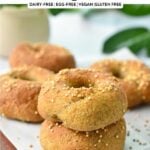
These Quinoa Bagels are easy 4-ingredient gluten-free bagels packed with proteins from raw quinoa. They are soft and delicious, like a sweet or savory bagel for breakfast.
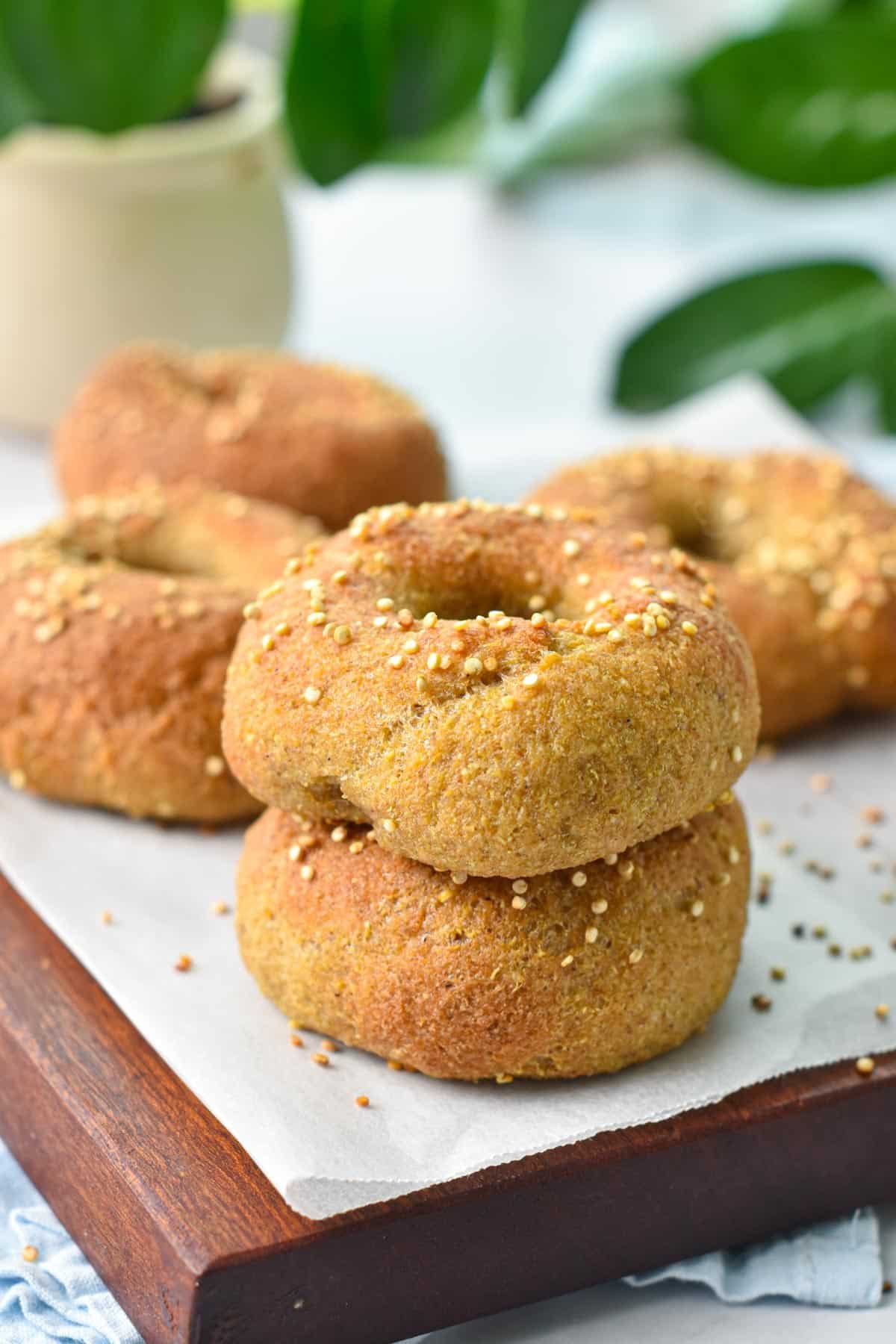
I love baking with quinoa. it’s fun and healthy and I had great success making quinoa tortillas or quinoa pancakes. That’s why I got inspiration to create a recipe for quinoa bagels. To make the bagels bouncy, and chewy, I use psyllium hush ingredients I knew would work because I used it in my vegan keto bread.
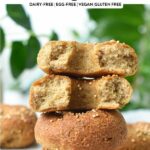
Then, I blended quinoa and water, like in my quinoa tortilla recipe and the result was amazing. Soft, bouncy chewy bagels packed with 4 grams of fiber and 4 grams of proteins.
While the whole recipe is just below, don’t miss all my tips further down, including ingredient swaps, my cooking tips, and step-by-step shots!
Like This Recipe?
Leave a comment below or head to our Facebook page where I reply to (almost) all comments, our Instagram page for inspiration, or our Pinterest for saving recipes!
Quinoa Bagels
Ingredients
- 1 cup Quinoa - raw, uncooked, white or any color (note 1)
- 1 cup Water
- 1 ¼ teaspoon Baking Powder
- 2 tablespoons Psyllium Husk Powder - Not Metamucil! (note 2)
To work the dough
- 1-2 tablespoons Olive Oil
Instructions
- Line a large baking sheet with parchment paper. Slightly oil paper with cooking oil spray. Set aside.
- In a bowl, add the uncooked quinoa, and cover with cold water. Soak for 2 hours or overnight at room temperature.
- Drain quinoa over a sieve, and rinse quickly under tap water.
- Place the quinoa in a high-speed blender (the recipe won't work in a food processor or low-speed blender). Add water and blend on high speed for about 1 minute until the mixture is almost smooth. You might see a few gritty spots of quinoa, that's all.
- Pour the liquid into a mixing bowl and add psyllium husk powder and baking powder.
- Stir with a rubber spatula for 1 minute. As you stir, the mixture changes a lot in texture. It's liquid at first and firm up, dry out as you stir.
- Cover the bowl with a towel and set aside for 25 minutes at room temperature.
- Remove the towel. The batter should be firm and sticky but form a ball easily.
- Preheat the oven to 400°F (200°C).
- Oil your hands and the dough bowl with a tablespoon of olive oil.
- Divide the dough into 6 even portions. Roll each with oiled hands in a ball and press the center of the ball with your thumb to form a hole.
- Place each bagel on the prepared baking sheet and add a metallic piping bag nozzle in the center of each bagel to prevent the hole from shrinking back in the oven.
- Brush the top of each bagel with water and sprinkle some extra quinoa or bagel seasoning.
- Bake the bagels at 400°F (200°C) on the center rack of the oven for 25-30 minutes until golden brown.
- Stop the oven, keep the door of your oven open, leave the baking sheet and bagel in the oven, and let them cool down on the baking sheet in the oven for 15 minutes. It prevents them from deflating. Then, transfer them to a cooling rack at room temperature.
Notes
Nutrition
Ingredients and Substitutions
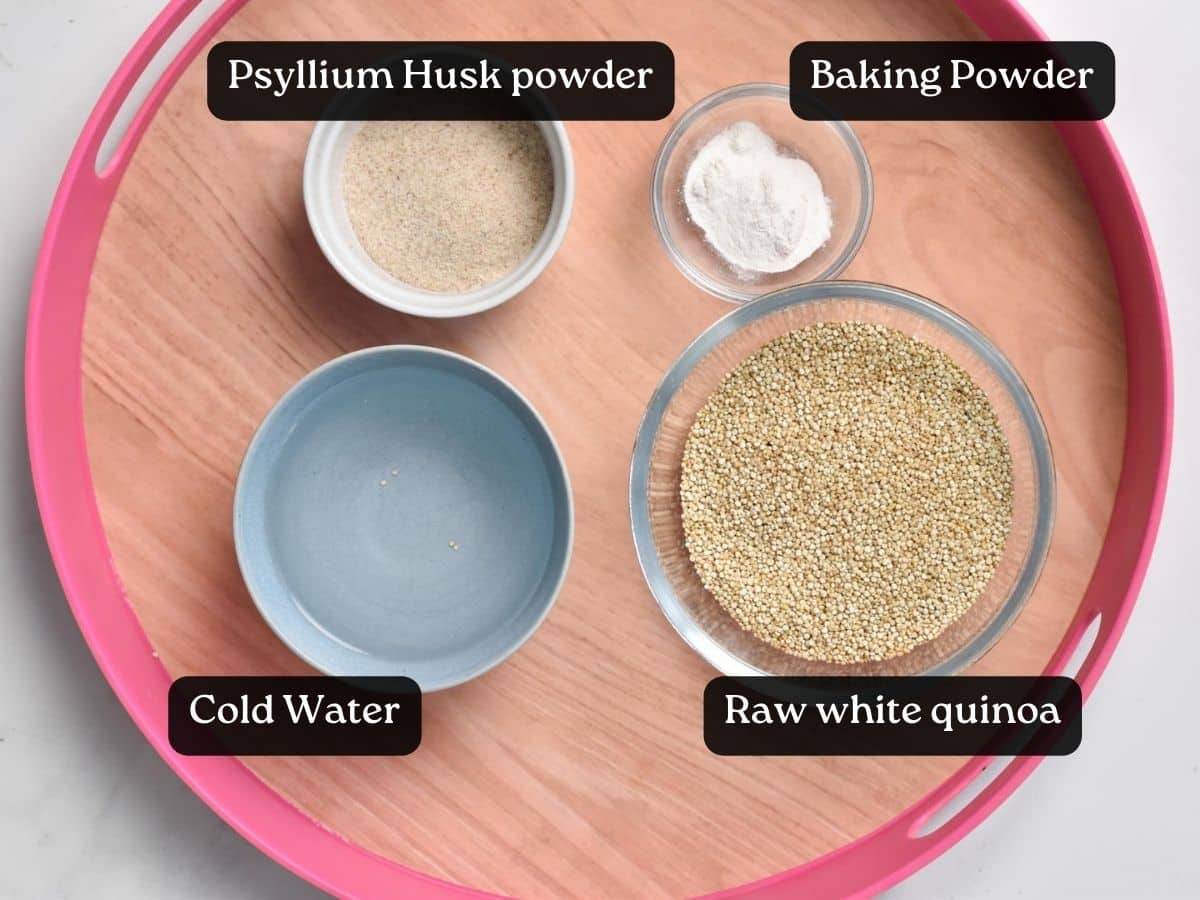
- Raw Quinoa – Any color, but keep in mind that red quinoa will turn the bread reddish. That’s why I prefer white quinoa for this recipe.
- Water – Cold water from the tap or lukewarm water, it doesn’t matter too much.
- Baking Powder to raise the bagels a little bit. Make sure you use gluten-free baking powder if needed.
- Psyllium Husk Powder – This is a crucial ingredient in this recipe. First, you can’t substitute these ingredients for anything else, like flaxmeal or chia seeds, or the bagels won’t be chewy and bouncy. Next, you must buy 100% husk powder, not a brand made of only 50% husk like Metamucil. Metamucil is a food supplement not made for baking. Finally, be aware that sometimes husk and baking powder turns food with a blue hue, and this just a natural reaction, the food is safe to eat.
How To Make Quinoa Bagels
- Line a large baking sheet with parchment paper. Lightly oil the paper with cooking oil spray. Set aside.
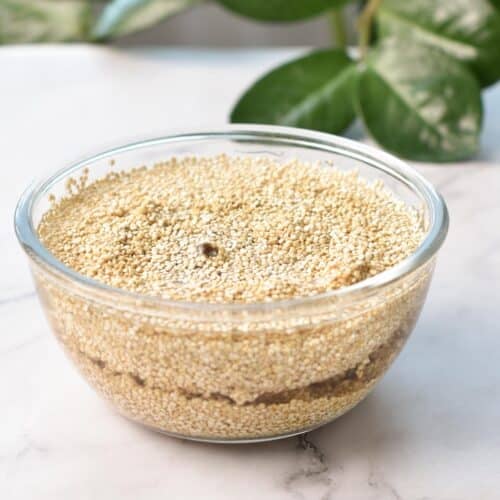
- In a bowl, add raw quinoa, cover it with cold water, and let it soak at room temperature for at least 2 hours but overnight is ideal.
- Drain over a sieve, rinse with cold water, and place in a high-speed blender with the water.
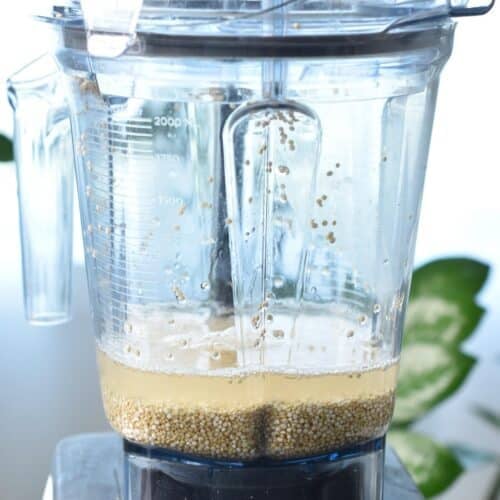
- Blend on high speed – speed 10 of a Vitamix – for 1 minute or until the mixture is lightly thick and white with gritty pieces of quinoa.
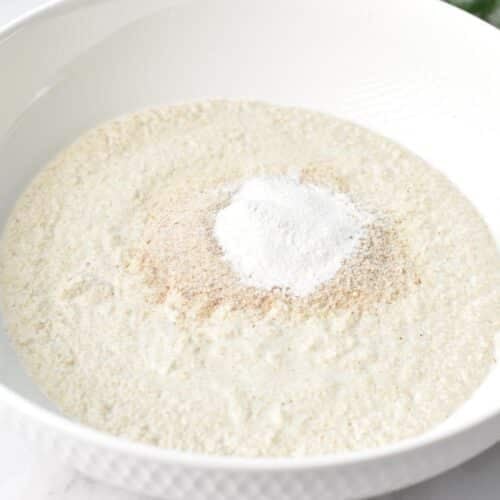
- Pour the mixture in a large bowl, add baking powder and psyllium husk powder.
- Stir with a rubber spatula for 1 minute. As you stir the fiber from husk absorb the water and turn the dough thicker and thicker. Cover the bowl, and let the batter rest for 25 minutes at room temperature.
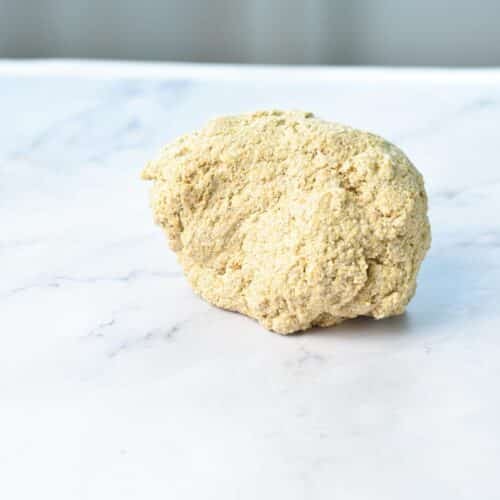
- After that time the batter is firm, and sticky, but you should be able to form a dough ball. Oil your hands generously with olive oil and rub the dough ball with your oiled hands.
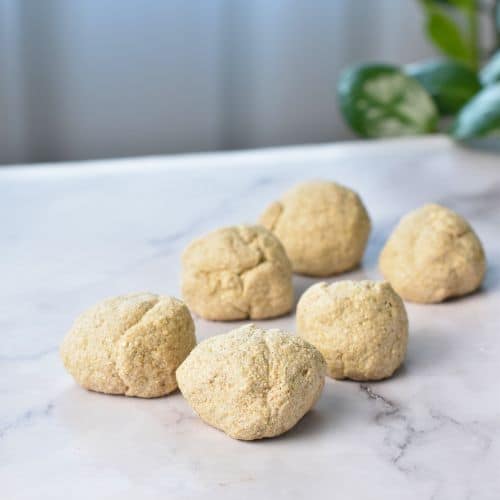
- Divide the dough into 6 portions and roll each into a ball with oiled hands.
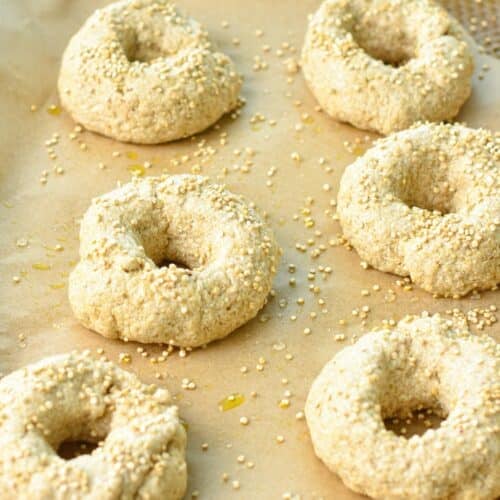
- Press the center of the dough ball with your thumbs to form a hole and place each bagel on the prepared baking sheet leaving a thumb space between each.
- Use a pastry brush to brush the top of each bagels with water and sprinkle extra raw quinoa, or bagel seasoning on top.
- Bake the bagels at 400°F (200°C) on the center rack of the oven for 25 to 30 minutes until golden brown.
- Stop the oven, keep the bagels in the oven, open the oven door wide, and let the bagels cool for 15 minutes in the oven.
- Then, let them cool at room temperature on a cooling rack.
Carine’s Tips
To make perfect quinoa bagels every time, follow these three easy tips.
- Do not use Metamucil. It’s not for baking and is not 100% husk.
- Don’t swap the husk powder for whole husk or something else.
- Do not use a food processor. It’s not strong enough to blend the quinoa.
Serving
Serve the bagels with sweet or savory toppings like:
- Raw vegetables, like cucumber, baby spinach leaves, shredded carrots, or avocado slices.
- Vegan cottage cheese
- Baby jam
- Date caramel
- Banana slices
Storage Instructions
You can store the bagels in an airtight container at room temperature for up to 3 days or freeze them in freezer bags for up to 1 month.


I love these! I have made them 6+ times and the dough never firms up like yours does. I have adjusted the water and physilum husk, but it still doesn’t firm up. Given that, I make buns instead of bagels. I absolutely love them, but any tips on getting the dough to firm up?
for me, the dough didn’t firm up until I started soaking the quinoa for only 2 hours exactly, Then I got great results.
That’s interesting! I would add some fiber form oat flour, it should help, start with 1/4 cup and see how it turns out. Thank you for baking my recipes so many times.
I’ve made these bagels once and will definitely be adding them to my go to recipes. Simple to make and great notes and comments to help along the way. I had to add more psyllium husk to help the dough firm up. Next time I will try adding salt to the dough mix. I sliced the bagels once they were cool and put them in the freezer. When I want one, I pull it out of the freezer, pop the slices apart, and then toast. I have them as a breakfast bagel and they don’t fall apart while i’m eating them!
hi I’ve made this recipe twice and double checked every detail but mine keep deflating and don’t rise like your pictures. is it because I use multi colour quinoa? please help.
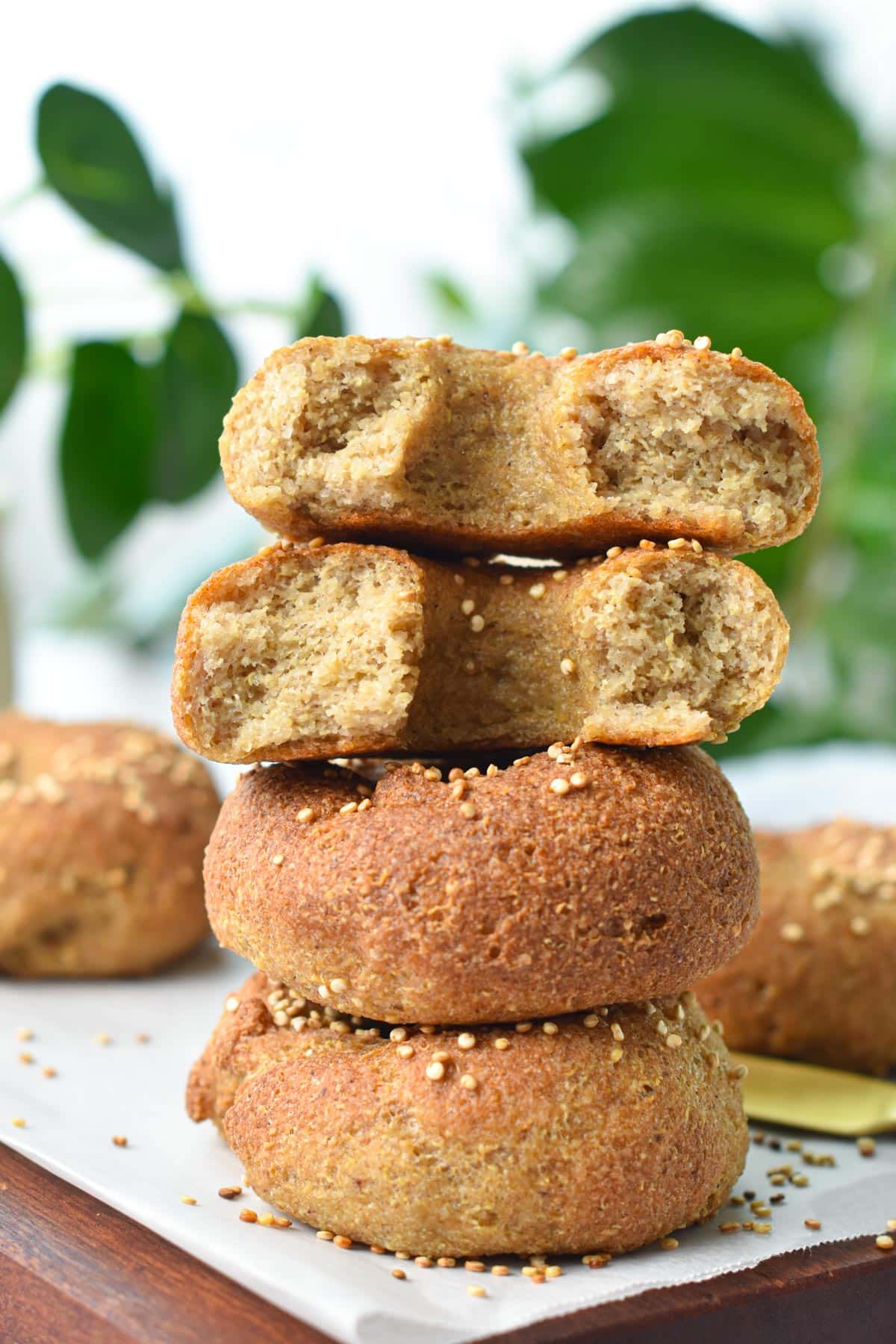
They won’t raise because there no gluten, the shape you give them before baking is the shape you get a the end. I simply shape mine a bit bumpy on the size, not flat. The picture is taking side ways which give depth and high. You are doing the right thing. I hope you enjoy the taste of these bagels.
Awesome recipe, thank you for sharing!
I’m not sure what I’m doing wrong but the dough won’t firm up.. I’ve tried twice
This happened when the psyllium husk you use is not pure, or not made for baking. That’s the ingredient that bind everything together. You can add more until the dough form, or try a different brans – some are actually food supplement made at only 50% husk! not made for baking.
I’m using 100% psyllium husk! I actually used this same psyllium husk to make your quinoa bread for my kids which turned out perfectly! 🙂
So, i’m not sure if i’m blending the quinoa for too long? I soak the quinoa overnight, rinse, add 1 cup of water and blend it for one minute like in the recipe but when I add in the psyllium and baking powder.. the batter never firms up. It stay sticky and runny.
Now, that’s intriguing ! All you could do is increase husk to firm up the batter, and it will simply add more fiber and chewier texture at the end, which can not be bad. I am sorry this happened to you tho!
Is there a reason you chose not to add salt to this recipe?
Thanks!
Not at all, you can add salt if you like, I tend to skip salt in most of my recipes.
Hello again,
I’ve been absolutely LOVING these bagels. They are soooo good and healthy! I have a quick question:
In your photo your bagels look “white” where as mine are darker, probably from the psyllium husk powder. Do you use a “white” psyllium? Not that I mind the darker bagel, more out of curiosity.
Thank you again.
Roberto
I don’t know why some husk turn food darker or not. Some husk brand even turn food purple blue! Mine is golden white if it can help. But the color won’t affect the taste. Thanks again for baking my recipes.
Hi- can I use quinoa flour instead of soaking and using blender? I only have food processor. Thanks!
I haven’t tried quinoa flour, you can experiment. But quinoa flour and ground raw quinoa are not exactly the same. Quinoa flour go through a process of roasting and preparation that deliver a different product at the end.
I don’t have a Vitamix blender could a regular blender work? I saw you said not to use a food processor.
Thank you!
Unfortunately no, food processor are not strong enough to pulse raw quinoa as thin as a blender and the bagels won’t firm up if the quinoa is grainy.
Finally a bagel that feels like bread! Almond flour was too dense, lentil was awful…these are fantastic toasted. Game changer for sure. Thank you!