

Esta Pastel de naranja y piña is a delicious tropical-flavor cake made with no eggs, no dairy, and no refined sugar for a dessert that screams summer.

Aunque la receta completa está justo debajo, no te pierdas todos mis consejos más abajo, que incluyen sustituciones de ingredientes, mis trucos de cocina y fotos paso a paso.
¿Te gusta esta receta?
Deja un comentario abajo o diríjase a nuestra página de Facebook donde respondo (casi) todos los comentarios, nuestro página Instagram para inspirarse o nuestra Pinterest ¡Para guardar recetas!

Pastel de naranja y piña
Ingredientes
- 2 tazas de Harina con levadura - (nota 1)
- 1 puede Piña triturada - (note 2) (8 oz)
- ⅔ taza de Azúcar de caña sin refinar - (nota 3)
- ⅓ taza de Aceite de coco derretido - (nota 4)
- ¾ taza de Jugo de Naranja - (nota 5)
- ½ taza de Coco Desecado - (nota 6)
- 2 cucharaditas de Extracto de vainilla - o 1 cucharadita de extracto de ron
Pineaple frosting
- ½ taza de Mantequilla vegana ablandada (sin sal)
- 1-2 cucharadas de Jugo de piña - (nota 7)
- 1 ½ taza de Azúcar en polvo
- 2 cucharadas de Piña triturada - opcional
Decoration – optional
- 12 Cerezas glaceadas
- 12 Rodajas de piña
- 12 Fresh Orange Quarters
Instrucciones para la impresión en alta definición
- Precalienta el horno a 180 °C (350 °F). Cubre un molde cuadrado de 23 cm (9 pulgadas) con papel de horno. Engrasa los lados y el fondo del papel y del molde. Reserva.
- En un bol grande, batir la harina leudante y el azúcar.
- Fold in the crushed pineapple, melted coconut oil, orange juice, vanilla extract, and unsweetened desiccated coconut.
- Mezclar con una espátula de goma para incorporar los ingredientes.
- Vierta la masa en el molde preparado.
- Hornea el pastel a 180 °C (350 °F) durante 35-40 minutos. Para comprobar si está listo, inserta un palillo en el centro. Si sale limpio, puedes sacarlo del horno. Si no, hornéalo durante más tiempo, en intervalos de 10 minutos, hasta que la miga esté firme.
- Let it cool down on a cooling rack at room temperature for 1 hour before frosting.
Frosting and decor
- To make the frosting, place the softened dairy-free butter in a stand mixer bowl or glass bowl.
- Use the paddle attachment or electric beater to beat the butter until smooth – about 1-2 minutes.
- Gradually whisk in the powdered sugar, on low speed at first, then increase to medium speed until everything is incorporated.
- If needed, scrape down the sides of the bowl. It will look a bit dry and thick, that's normal, add a tablespoon or 2 of pineapple juice (or almond milk or orange juice) to thin it out. If you add the crushed pineapple in the next step, then 1 tablespoon will be enough.
- Feel free to whisk in drained crushed pineapple for flavor.
- If the frosting thins out too much, simply whisk in a bit extra powdered sugar.
- Spread evenly on top of the cake, and decorate with glace cherries, pineapple chunks, and orange slices.
Notas
Nutrición
Ingredientes y sustituciones
Solo necesitas unos pocos ingredientes sencillos para preparar esta receta. Aquí te explicamos cómo elegirlos y sustituirlos.

- Harina con levadura – This forms the main structure of your cake, ensuring it rises and has a tender crumb. If you don’t have self-rising flour, you can create your own by mixing all-purpose flour with baking powder (ratio in the recipe card). For a gluten-free option, use my convertidor sin gluten, pero no olvides el polvo para hornear.
- Piña triturada – This is a key ingredient, bringing sweet, tangy flavor and moisture to the cake. You’ll use it with its juice for the cake batter, and optionally a little more in the frosting.
- Azúcar sin refinar – This provides the sweetness for your cake. You can easily substitute it with other granulated sweeteners like coconut sugar or regular granulated sugar, and adjust the amount to your preference.
- Aceite de coco derretido – This fat contributes to the cake’s moist texture. You can also use any other neutral-flavored oil suitable for baking.
- Jugo de Naranja – This adds a citrus flavor and essential liquid to the cake batter, complementing the pineapple beautifully. It’s best to use freshly squeezed juice.
- Coco Desecado – This adds a lovely tropical aroma and subtle texture to the cake. If you’re not a fan of coconut in the cake crumb, you can omit it or swap it for almond flour.
- Extracto de vainilla – This enhances the overall flavors of the cake, adding a warm, sweet note. For an even more tropical twist, rum extract also works wonderfully.
- Softened Vegan Butter – Use this for the rich, creamy base of your pineapple frosting. Make sure it’s at room temperature for easy beating.
- Jugo de piña – This liquid helps thin out the frosting to the right consistency and boosts the pineapple flavor. If you don’t have pineapple juice, you can use almond milk or even orange juice for a different flavor profile.
- Azúcar en polvo – This fine sugar is essential for creating a smooth, sweet frosting. You’ll gradually whisk it into the softened butter. Use can use powdered sugar-free sweetener.
- Cerezas glaceadas – These are an optional decoration, adding a pop of color and a classic touch to your finished cake.
- Rodajas de piña – These are an optional decoration, visually reinforcing the pineapple flavor of the cake.
- Fresh Orange Quarters – These are an optional decoration, adding a fresh citrus element to the cake’s presentation.
How to Make Orange Pineapple Cake
This is a really simple recipe you can prep in just about 10 minutes. Here’s how.

Press the oranges to get the juice and measure it. Add the crushed pineapple.

Pour all the wet ingredients, sugar, and coconut and stir to combine.

Incorporate the flour without overmixing.
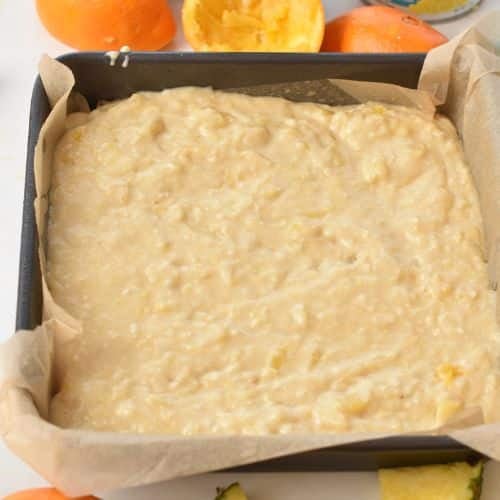
Pour the batter into a square baking pan lined with parchment paper.
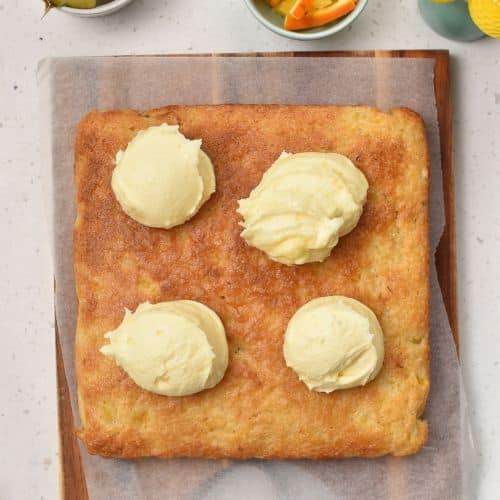
Bake the cake at 350°F (180°C) for 35-40 minutes while preparing the frosting.

Spread the frosting and decorate the cake with fresh pineapple slices, orange slices, and glacé cherries.
Consejos de repostería de Carine
Let me share a few more tips for a perfect pineapple cake
- Preparación de la sartén – Properly lining and oiling your cake pan is crucial. The parchment paper sling helps you easily remove the cake after baking without it sticking.
- Consistencia del bateo – When mixing the cake batter, stir with a rubber spatula just until everything is combined. Overmixing can sometimes make the cake tough. The batter will be thick, which is normal for this recipe.
- Cake Doneness Check – To ensure your cake is fully baked, always insert a toothpick into the center. If it comes out clean, the cake is ready. If it still has wet batter or crumbs, continue baking in 10-minute increments.
- Cooling Patience – Let the cake cool completely on a cooling rack for at least an hour before you try to frost it. Attempting to frost a warm cake will cause the frosting to melt and slide off.
- Frosting Consistency – When making the frosting, add the pineapple juice (or other liquid) a tablespoon at a time until you reach your desired consistency. You want it spreadable but not too thin. If it gets too thin, simply whisk in a bit more powdered sugar.
- Flavorful Frosting Swaps – Get creative with your frosting! You can swap the pineapple juice for freshly squeezed orange juice (with pulp and a bit of zest) for an orange-flavored frosting, or simply use almond milk and vanilla extract for a classic vanilla frosting.
- Fresh Pineapple for Cake – If using fresh crushed pineapple in the cake batter, make sure you drain it thoroughly first. Fresh pineapple contains more juice than canned, and excess liquid can affect the cake’s baking and firmness.







I love eating plant food recipes. Thank you.
That’s lovely to hear!
loojs yummie
let me know if you try!