

Ho sviluppato un metodo per convertire tutte le mie ricette di dolci con farina 00 (o autolievitante) in ricette senza glutine. Bastano poche modifiche per gustare tutto il sapore e quasi la stessa consistenza in tutti i miei muffin, pane, scones, brownies e torte!
È necessario adattare la ricetta secondo le istruzioni fornite di seguito.
Strumento di conversione per farine senza glutine
Determinare la miscela esatta per sostituire la farina di frumento con una miscela senza glutine personalizzata.
1. Seleziona il tipo di ricetta
2. Quantità di farina di frumento da sostituire
3. Che tipo di farina è richiesta dalla ricetta?
La tua miscela di farina senza glutine
Ti servirà tutto quanto segue:
Seleziona le opzioni qui sopra per visualizzare gli ingredienti necessari.
* Gli importi sono arrotondati per motivi di praticità. La quantità minima misurabile negli Stati Uniti è di 1/8 di cucchiaino.
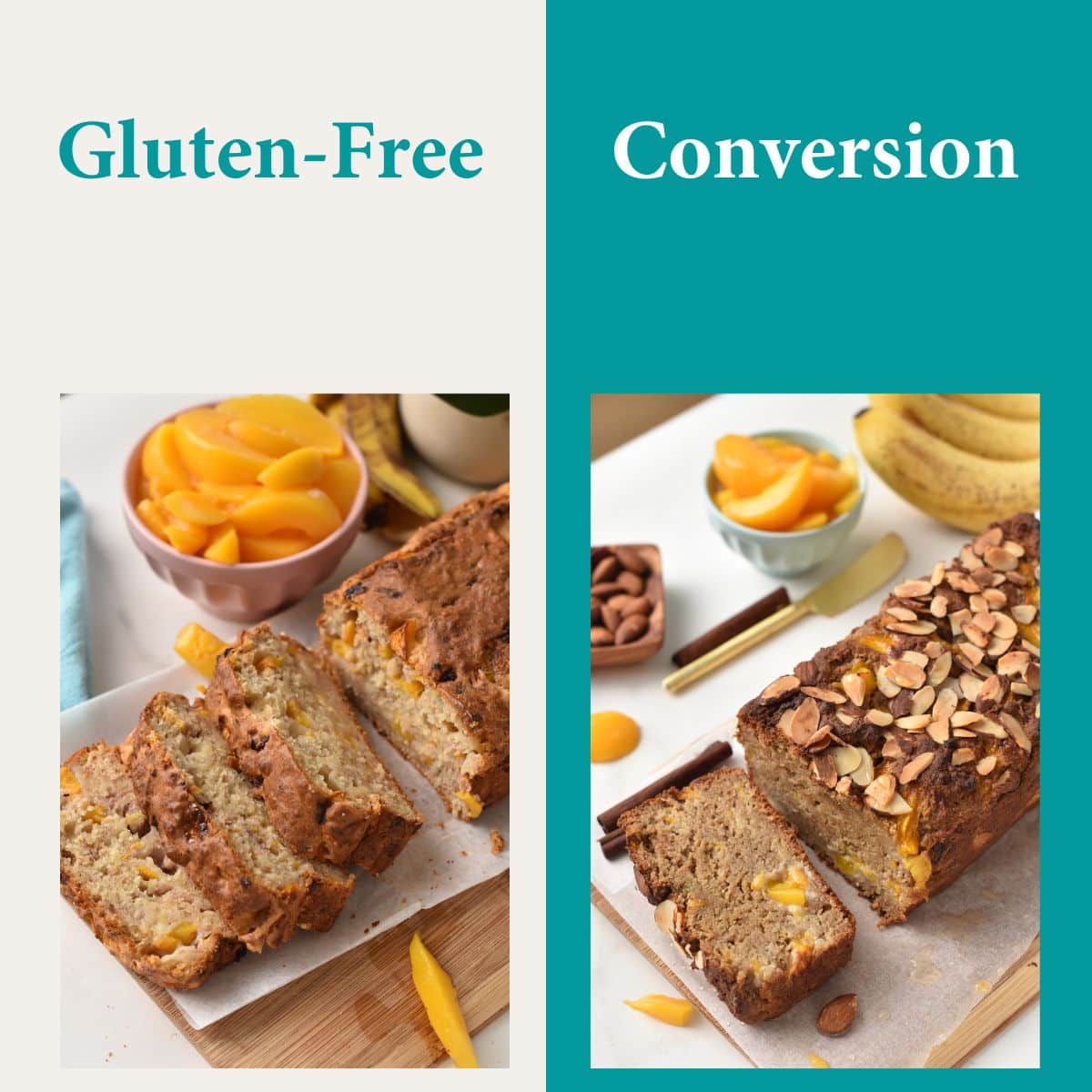
Non è così semplice come sostituire la farina di grano tenero con la farina di grano tenero senza glutine. Una torta risulterebbe gommosa, un bagel duro come una pietra o dei brownie densi. Non c'è mai un rapporto 1:1 perché non uso uova nelle mie preparazioni.
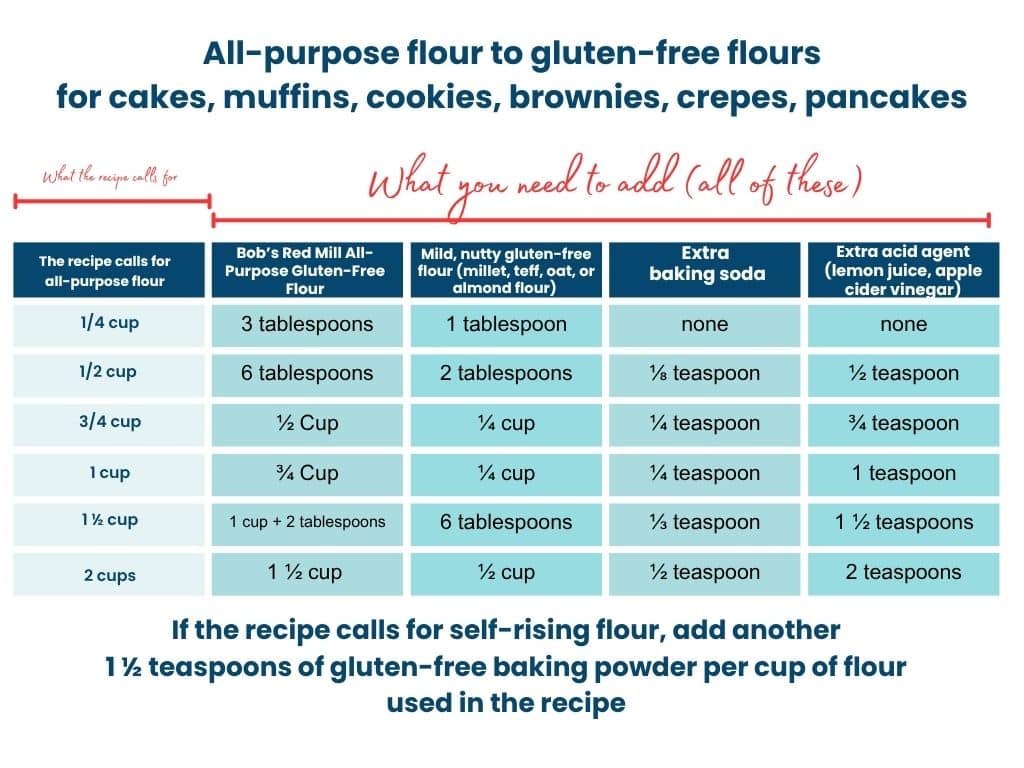
Trasformazione di torte, muffin, brownie, crêpe e pancake
Quando si trasforma una ricetta a base di farina di grano in un prodotto da forno senza glutine e senza uova, è necessario un mix di farine, come un mix multiuso senza glutine e una farina di frutta secca (ad esempio, teff, miglio), insieme a bicarbonato di sodio e succo di limone. Questo perché l'assenza di glutine e uova è fondamentale per la struttura e la lievitazione. Il glutine conferisce elasticità e una struttura che intrappola i gas, mentre le uova apportano proteine per la struttura, grassi per la ricchezza e umidità.
In loro assenza, la miscela senza glutine multiuso offre una base di amidi e gomme per imitare le proprietà leganti del glutine. L'aggiunta di farine di frutta secca come miglio, teff o avena conferirà una struttura della mollica più fine, evitando che i prodotti da forno risultino gommosi o troppo elastici.
Il bicarbonato di sodio (una base) e il succo di limone (un acido) reagiscono producendo anidride carbonica, che fornisce la lievitazione e l'aerazione necessarie che normalmente sarebbero apportate dalle uova, garantendo un prodotto finale più leggero e meno denso.
Questa combinazione crea un effetto sinergico, compensando gli elementi mancanti per ottenere la consistenza e la lievitazione desiderate.
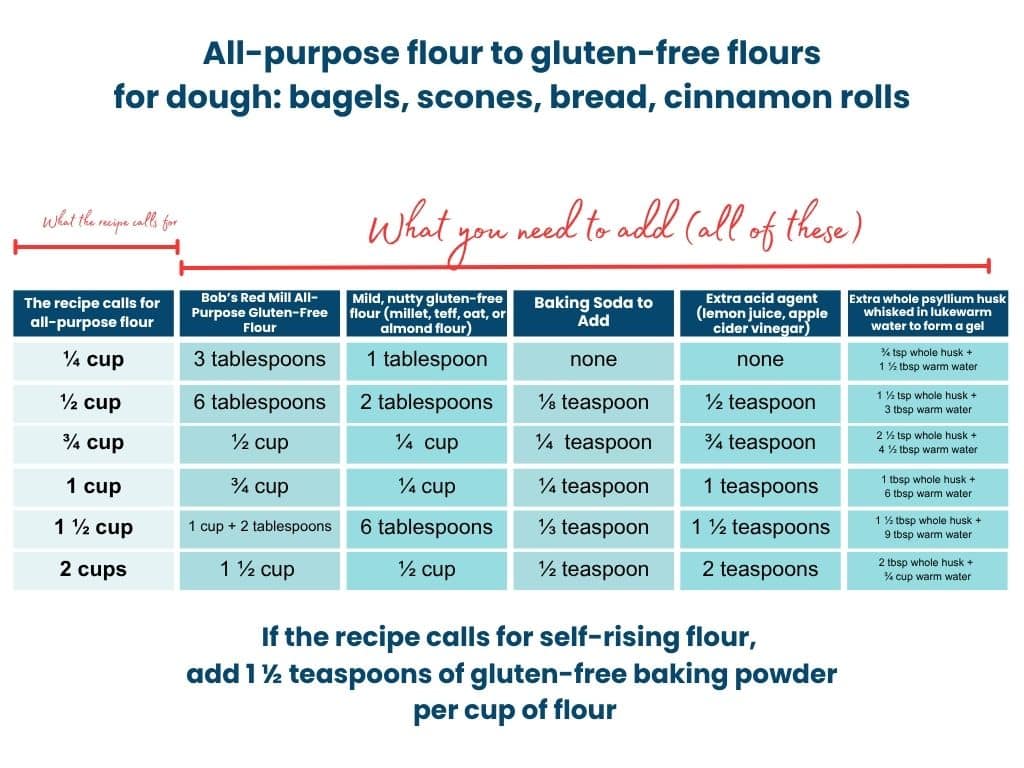
Conversione di ricette per il pane (scones, bagel, pane, girelle alla cannella)
Per gli impasti senza glutine e senza uova, come quelli per bagel, scones e cinnamon rolls, che dipendono intrinsecamente dal glutine per la loro consistenza ed elasticità, è necessaria l'aggiunta di un gel di buccia di psillio intera.
La buccia di psillio è un potente idrocolloide, ovvero assorbe e trattiene una quantità significativa di acqua, formando un gel stabile, appiccicoso e leggermente elastico. Non è possibile sostituire questo ingrediente con farina di semi di lino o semi di chia. Non si otterrebbe la stessa consistenza gommosa.
Nella panificazione tradizionale, il glutine forma una rete che intrappola i gas prodotti dagli agenti lievitanti, conferendo al pane struttura ed elasticità. Senza glutine, questi impasti possono risultare friabili, secchi e densi, privi della giusta consistenza. Il gel di psillio imita alcune delle proprietà del glutine, creando un impasto lavorabile in grado di intrappolare l'aria e mantenere la sua forma. Questa rete di gel contribuisce anche a legare insieme le farine senza glutine, evitando un risultato duro, secco e irregolare e favorendo invece una mollica morbida e umida e l'elasticità desiderata.
Prima di iniziare la ricetta, misurate tutti gli ingredienti. Tenete a portata di mano gli ingredienti liquidi, perché li incorporerete subito al gel di bucce.
- Per prima cosa, sbattete energicamente l'intera buccia di psillio con l'acqua tiepida fino a ottenere una pasta gelatinosa densa.
- Incorporare immediatamente gli ingredienti liquidi rimanenti della ricetta, come latte vegetale, succo di limone, olio, ecc.
- Aggiungere gli ingredienti liquidi agli ingredienti secchi rimanenti della ricetta per formare l'impasto.
Ingredienti necessari
Per preparare la tua miscela di farina senza glutine, ti servirà:
- Farina senza glutine multiuso: consiglio Bob's Red Mill senza glutine
- Farina di miglio: la consiglio Miglio macinato a pietra di Bob's Red Mill
- Bicarbonato di sodio
- Succo di limone or Aceto di sidro di mele
- Psyllium Husk (per bagel, focaccine, pane, panini)
- E per preparare la farina autolievitante: Lievito in polvere senza glutine.
Cosa devo aspettarmi?
Con le farine alternative senza glutine, otterrete un sapore molto simile a quello della farina di frumento, tuttavia la consistenza sarà leggermente diversa.
La preparazione di prodotti da forno senza glutine conferirà una consistenza leggermente più densa e gommosa rispetto a quella ottenuta con la farina tradizionale.


Hi sorry I really need more help. I never baked in my life but I’m trying my best for my little one who loves baking. Anyway we done your banana muffin and she liked them and now we will try to make your banana and blueberry muffins but I wanted then to try the gluten free version so we can make for her birthday party at school, the teachers already said that it has to be something no eggs no dairy no chocolate gluten free. Please help.
All you have to do is use this gluten-free converter above. Enter the quantity of flour from the recipe you want to bake from my website and read the gluten-free mixture below to know exactly what to add instead of flour.
Disregard last message I see you suggest blue Bob. Is there anyway the conversiins will work with red Bob? I try to avoid xanthum gum.
I haven’t tried the red one yet, but since my recipes are egg-free, the gum really help with texture.
Do I really need psyllium husk? I don’t have that at hand.
Yes, when you adapt an egg-free baking recipes into a gluten-free recipe, the husk is necessary for dough.
Opzioni senza glutine
Yes, they are above in the gluten-free conversion tool.
Thank you so much for this conversion to gluten free – it is so hard to bake gluten free and I have a ton of recipes from my mom who baked with regular flour that I would love to bake gluten free because I have a gluten intolerance.
I am so glad you find it useful!
I notice that most commercially available GF breads have gums in their ingredients. What is their purpose and what is a good substitute? Can I use psyllium? Or is that more of a binding agent?
Gums in gluten-free flour blends are essential for replacing the structure, elasticity, and binding ability of gluten in baked goods. In short, they act as the “glue” that holds everything together. Psyllium husk is nto a swap to gums, it’s added in gluten-free baking for breads and dough, to form a pliable, stretchy gel that allows the dough to be kneaded and shaped.
Ciao Carine,
So am I correct if I wanted to make your cherry banana bread recipe. Which uses self rising flour I would follow your conversion table for cakes, muffins and follow all steps for 1 1/2 cups but add an additional 1 1/2 tsp of baking powder.
It is not totally clear when it comes to self rising verses all purpose.
As written in bold at the bottom of the first table “If the recipe calls for self-rising flour, add another 1 1/2 teaspoon of gluten-free baking powder per cup of flour used in the recipe.”
It means if the recipe calls for 1 cup of self-rising you need 3/4 cup all-purpose GF flour (as seen on the first table) + 1 1/2 teaspoon baking powder (this makes your gluten-free self-rising flour). But then you also need to add the extra 1/4 cup nutty flour + 1/4 teaspoon extra baking soda + 1 teaspoon lemon juice.
Ciao Carine,
Thankyou. In the uk we sell gluten free self raising flour.(Freee)So wanted to establish if can use that plus following your conversion or it would be find just straight swap 1:1 ratio. But will figure it out with trial and error.
What I would do, if my recipe calls for 1 cup self-rising flour, use the chart for 1 cup and apply all the changes. It means for example on the cake chart, you will swap 1 cup self-rising flour for 3/4 cup gluten-free self-rising flour + 1/4 nutty flour + 1/4 teaspoon baking soda + 1 teaspoon lemon juice.
what if the recipe calls for 2 tablespoons of regular flour and I need to sub it?
If the flour is less than 1/4 cup then you don’t need this conversion chart. Simply use a 1:1 ratio without adding anything else.
Thank you. So GF for your wreaths would be which one?
It will be the first table, the one for cookies.
thank you for the conversion tips for gluten free. i have gone off baking scones cos they turn out yuk. hope this will help
I hope it help you enjoy some good baked goods again! I know what you mean, as I created this chart for myself who can’t eat much gluten and a 1:11 swap was always so tough, dense !