

It’s easier than you think to get the protein you need on a vegan diet. The vegan protein source chart below will help you identify the best sources of protein to add to your shopping list.
Why do proteins matter?
Proteins are one of the 3 types of macronutrients (along with carbohydrates and fats) that the body needs to properly function. Many of today’s cuisines have meat as the primary source of proteins.
However, for vegans (and vegetarians to a lesser extent), finding healthy plant-based sources of protein is not as easy.
Protein is necessary for the body to repair damaged tissue or grow additional tissue. For things like making more muscle if you are working out or fixing your damaged quads after a long run. Even fixing a broken bone takes proteins.
The body also needs protein to build necessary helpers like hormones, enzymes, or blood. Use our vegan protein sources chart to get your daily ration of protein!
How much protein is enough?
Proteins are essential for living healthy, but there’s a common misconception that we need a lot of them.
The commonly accepted recommended intake is 0.36 grams per pound of body weight per day or 0.8 grams per kilo of body weight per day.
For a typical woman of 60kg / 130lbs, the recommended intake is 48g of protein per day.
For a typical man of 75kg / 165lbs, the recommended intake is 60g of protein per day.
Of course, this is an average. If you are exercising a lot, your body will need more protein than that.
What happens if I take too much protein?
There are a few side effects of eating too much protein. Most of them are fully reversible, though.
- Viktökning: the body tends to store excess protein as fat.
- Dålig andedräkt: if your protein intake is done parallel with lower carb intake, your body might be in ketosis, often leading to bad breath.
- Dehydrering: there is a possible link between protein intake and lower hydration levels, but that is not entirely proven.
Note that you might find many other side effects linked to proteins, but many of these side effects are due to the type of protein consumed. Essentially, animal-based proteins are linked to an increased risk of kidney damage, cancer, heart disease, and calcium loss. But on a vegan diet, these risks have not been found!
What happens if I don’t have enough protein?
Protein deficiency can lead to a few negative consequences. Essentially, because proteins have a healing role in the body (muscle, skin, etc.), an insufficient protein intake leads to:
- Higher chance of infections: fewer enzymes (some are fighting bugs), less efficient blood circulation leaves the body at risk.
- Longer muscle recovery and muscle loss: A lack of protein leads to muscle decay. They shrink over time as muscle cells are not replaced. They are also weaker and slower to recover after an effort.
- Lång sårläkning: if you cut yourself, healthy blood would throw many blood cells at the wound to fix it quickly. If you are protein deficient, fewer blood cells mean slower healing.
- Higher risk of fracture: bones are alive, and their maintenance requires proteins. A lack of protein leads to more fragile bones.
All up, it is quite clear that proteins are important. According to current medical information, it is apparent that the risks associated with higher levels of protein are less important than the risk of low levels of proteins, in particular on a vegan diet.
Are all proteins equal?
Proteins are essential macro-nutrients for your body. But the term protein itself refers to chains of one or more aminosyror – the brick of proteins.
There are 20 amino acids that the body needs to function, and 9 of them are called “essentials,” which means they can’t be synthesized, created by the body.
The 9 essential amino acids (histidine, isoleucine, leucine, lysine, methionine, phenylalanine, threonine, tryptophan, and valine) must then come from your food.
All proteins, regardless of their source (meat or vegetables), are made of various combinations of amino acids.
As a result, not all proteins will bring the right ratio of each amino acid, let alone the right quantity of essential amino acids.
Therefore, whatever the amount of protein you take, it is essential to diversify the sources to ensure that your body will get the right amount of each of its essential and non-essential amino acids.
Use our vegan protein sources chart to mix your vegan sources of protein!
What are the vegan complete protein sources?
Despite what people think, meat is not the only complete protein source! Many vegan-friendly foods contain all 9 essential amino acids.
Bland dem är:
- quinoa
- Tofu (as well as Tempeh and Edamame beans)
- Bovete
- spirulina
- Hampafrön
- Chia frön
- Näringsjäst
- Hummus
Where can I find the best vegan protein sources?
First, did you know you only need 0.8g of protein per kg of body weight per day? This is actually not that much, and it’s easily achievable eating 100% plant-based protein. So, let’s see what the main protein sources for vegans are and how much protein each ingredient will bring you per 100 grams.
- Nötter – almonds, cashews, pecans, walnuts, hazelnuts
- Frön – pumpkin seed, flaxseed, sunflower seeds, hemp seeds, sesame seeds
- Korn – rice, amaranth, quinoa, wheat, spelt
- Pulser – chickpeas, black beans, cannellini beans, lentils
- Grönsaker – Spinach, broccoli, artichokes, asparagus
- Jag är en produkt – mung beans, edamame, soy milk, tofu, tempeh
- Några frukter – avocado, apricots, blackberries, banana
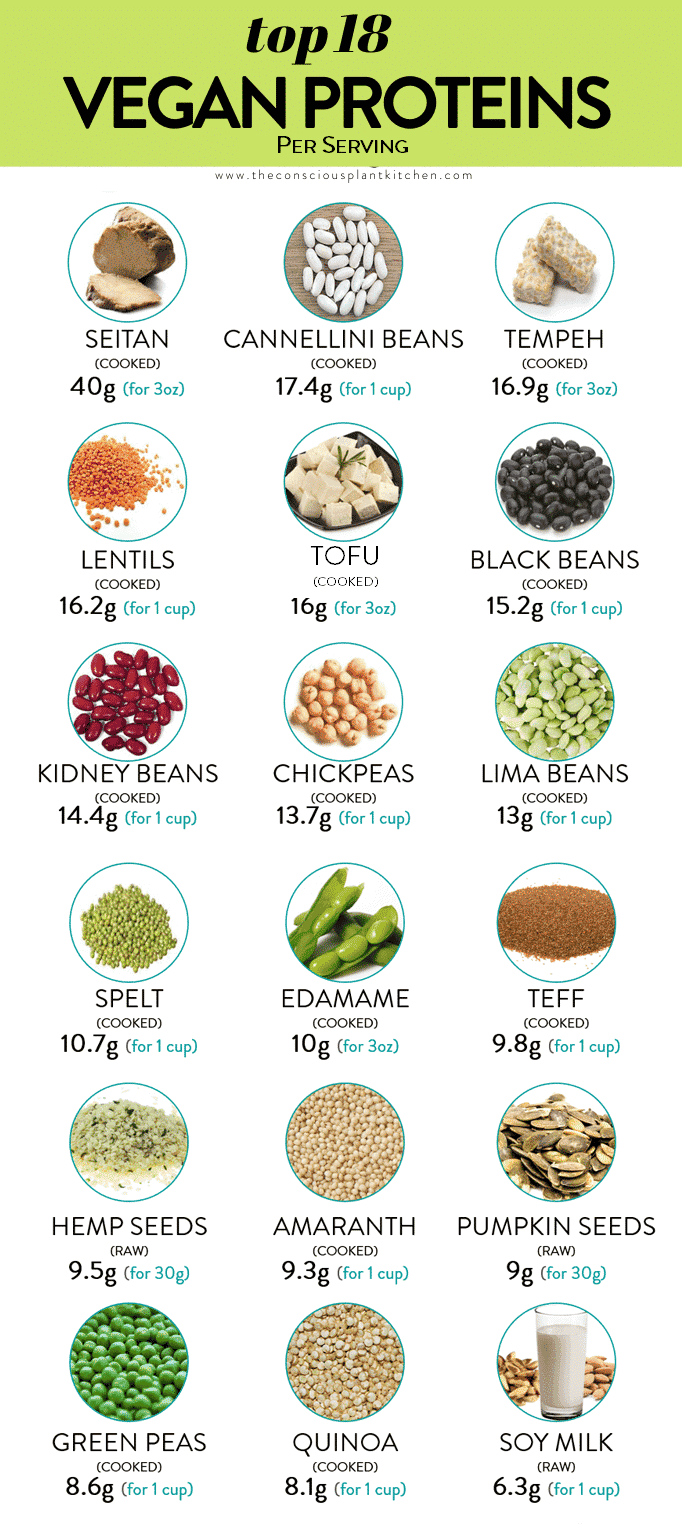
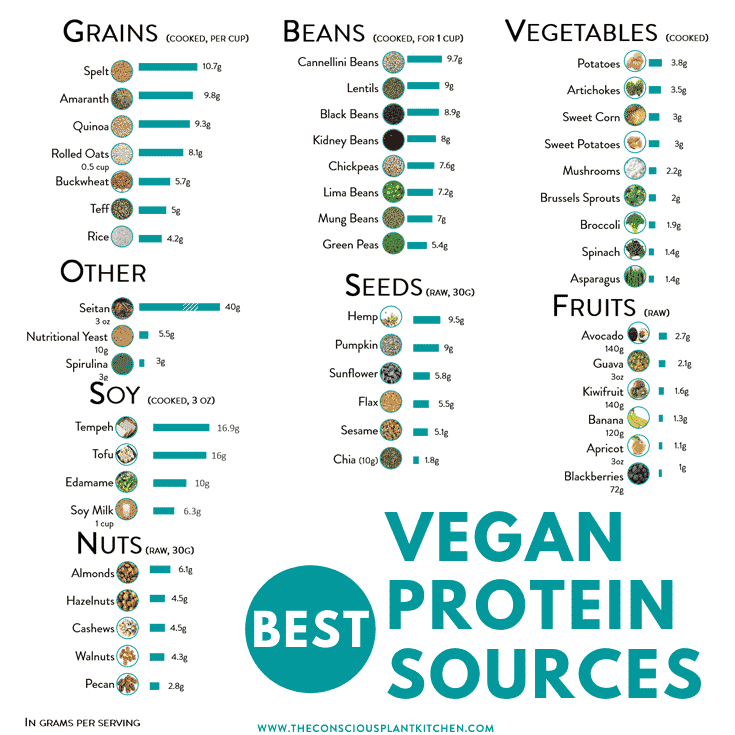
The vegan protein sources chart below gives you more details about how much protein you will get per typical serving of each ingredient.
Top 20 Best Vegan Protein Sources per 100g
Find below the highest vegan protein sources per 100g.
- spirulina (dried): 55-66g / 100g [1][2]
- Näringsjäst (powder): 45-55g / 100g [3][4]
- seitan (cooked): 24-72g / 100g [5][6]
- Hampafrön: 31 g / 100 g [7]
- Pumpafrös: 29.9g / 100g [8]
- Mandlar: 20.3 g / 100 g [9]
- tempeh (cooked): 19.9g /100g [10]
- Solros Frön: 19.3g/100g [11]
- Tofu (fried): 18.8g /100g [12]
- Linfrön: 18.3g/100g [13]
- Chia frön: 18.3g/100g [14]
- Sesamfrön: 17g/100g [15]
- Hazelnut: 15g/100g [16]
- Cashew nötter: 14.9g/100g [17]
- Valnöt: 14.3g/100g [18]
- Havregryn: 12.5g/100g [19]
- Edamame (cooked): 11.9g /100g [20]
- Cannellinibönor (cooked): 9.7g /100g [21]
- Pecannöt: 9.2g/100g [22]
- Linser (cooked): 9g /100g [23]
Top 20 Best Vegan Protein Sources per typical serving
Find below the highest vegan protein sources per serving.
- seitan (cooked): 20-61g / 3oz [5][6]
- Cannellinibönor (cooked): 17.4g /cup [21]
- tempeh (cooked): 16.9g /3oz [10]
- Linser (cooked): 16.2g /cup [23]
- Tofu (fried): 18.8g /3oz [12]
- Svarta bönor (cooked): 15.2g /cup [24]
- Njurebönor: 14.4g /cup [25]
- Kikärter: 13.7g /cup [26]
- Limabönor: 13g /cup [27]
- Mungbönor: 12.6g /cup [28]
- spelt (cooked): 10.7g /cup [29]
- Edamame (cooked): 10g /3oz [20]
- Teff (cooked): 9.8g /cup [30]
- Hampafrön: 9.5g/30g [7]
- Amarant (cooked): 9.3g /cup [31]
- Pumpa Frön: 9g/30g [8]
- Gröna ärtor: 8.6g /cup [32]
- quinoa (cooked): 8.1g /cup [33]
- Sojamjölk: 6.3g /cup [34]
- Mandlar: 6.1g/30g [9]
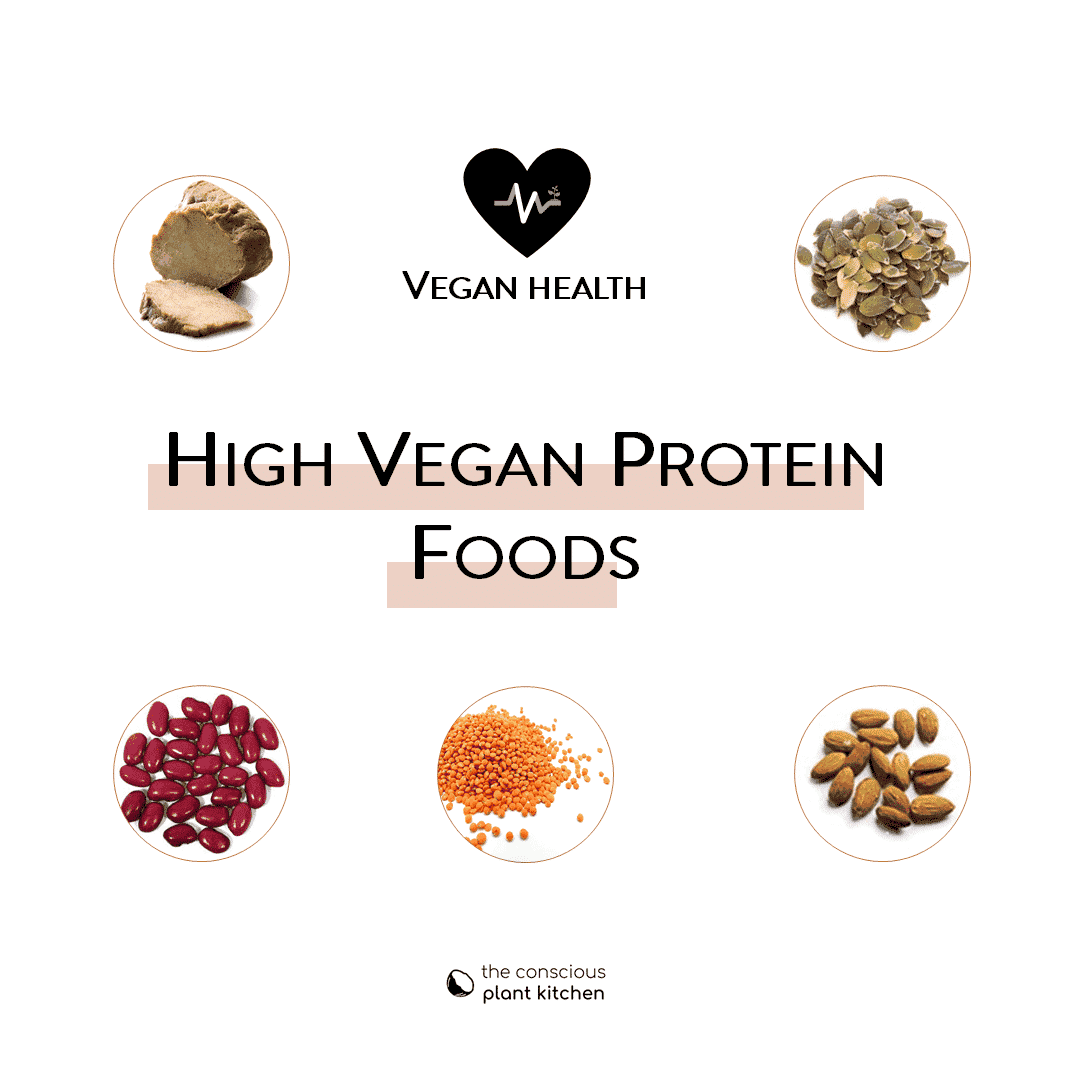
What are high-protein vegan foods?
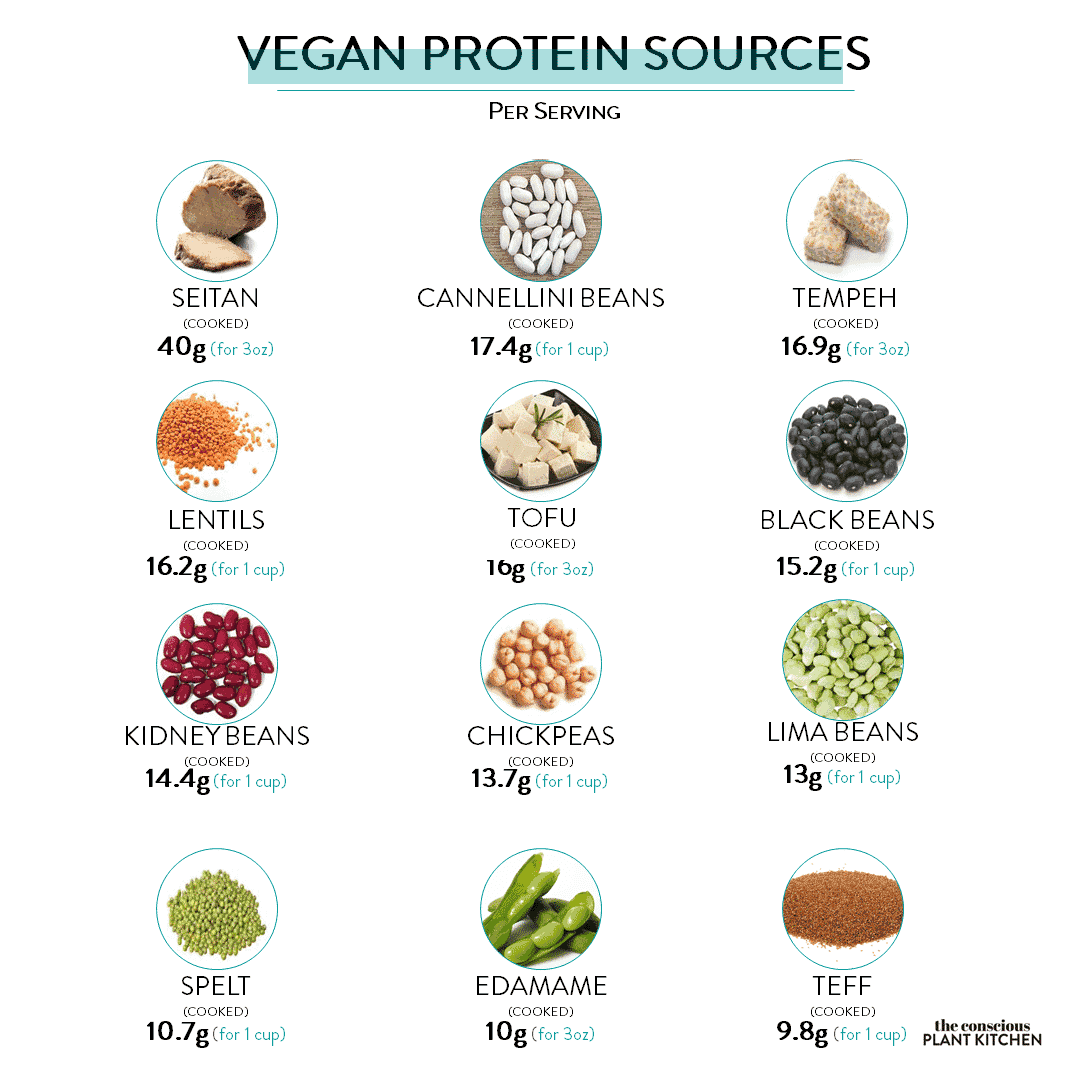
The highest protein vegan foods per serving are:
Seitan (20-61g per 3 oz – cooked)
Seitan is a popular vegan protein source. In fact, it is a high-protein meat replacement with a meat-like texture when cooked. However, watch out if you are sensitive to gluten. Seitan contains a large amount of vital wheat that won’t be suitable for you. It is also a highly processed ingredient, so not ideal for a wholesome lifestyle!
Cooked beans (8.6g – 17.4g per 1 cup – cooked)
Beans of all sorts are a good source of protein on a vegan diet. Their protein content ranges from 8.6g per serving (1 cup) up to 17.4g per serving for the mighty Cannellini Bean.
- Cannellini Beans (17.4g)
- Lentils (16.2g)
- Black Beans (15.2g)
- Kidney beans (14.4g)
- Chickpea (13.7g)
- Lima Beans (13g)
- Mung beans (12.6g)
- Green Peas (8.6g)
Tempeh (16.9g per 3oz – cooked)
Tempeh is a traditional soy product from South East Asia. It is made with fermented soybeans that are bound into a dense block. Tempeh can be used in salads, sandwiches, and as a filling in wraps or pita.
Tempeh has a good amount of vegan protein, with close to 30% of the DRI.
Tofu (16g per 3 oz – cooked)
Tofu is soft, smooth soybean curd. Compared to Tempeh made with fermented beans, Tofu is made with Soy Milk that is left to coagulate. Tofu exists in many different textures that tend to somewhat alter its taste.
Spelt (10.7g per cup – cooked)
Spelt, also known as Dinkel wheat or hulled wheat, is a cereal very similar to wheat. It can be used as flour or cooked as a side dish, similar to wheat.
Edamame (10g per 3 oz – cooked)
Edamame is the Japanese name for immature soybeans. When still in their pods, Edamame beans look very similar to pods of green peas.
They are delicious simply cooked in boiling water and sprinkled with salt or spices.
Teff (9.8g per cup – cooked)
Teff is a small grain, relatively similar in size to Amaranth seeds. It is also considered a super-food for its protein concentration, which happens to contain a very balanced variety of amino acids. Teff is also a good source of iron, fiber, and minerals.
Hemp Seeds (9.5g per 30g – raw)
Hemp seeds or hemp hearts are the seeds from the hemp plant and show a very high nutritional profile. They are high in protein but also in healthy fats and minerals. The best way to enjoy them is for breakfast mixed with your favorite vegan cereals or plain dairy-free yogurt. You can also add 1 tablespoon of hemp seeds in smoothies or shakes.
Amaranth (9.3g per cup – cooked)
Amaranth seeds are a superfood that contains not only a good amount of protein but also many vitamins and minerals. Plus, it adds a delicious taste, dry or puffed!
Pumpkin Seeds (9g per 30g – raw)
Pumpkin seeds can be used in breakfast cereals, so make sure to check out our grain-free breakfast cereals recipe for inspiration. Roasted in olive oil, they make a delicious soup topping!
Quinoa (8.1g per cup – cooked)
Quinoa is a seed that is actually from the Amaranth family. It is a good source of many vitamins and minerals, with, for instance, 95% of the RDI in Manganese.
Soy Milk (6.3g per cup – raw)
Soy Milk is a milk alternative produced by grinding and soaking soybeans. It can be used to make tofu or consumed as is, to replace milk in most recipes, or as a breakfast drink.
It contains far fewer carbs than cow milk (about 3 times less) while having a similar vitamin content and less fat.
Almonds (6.1g per 30g – raw)
Almonds are a great snack, raw, roasted, or salted. There are many ways to enjoy them daily. They also act as vegan, gluten-free flour in baking like in these Chokladkakor med mandelmjöl.
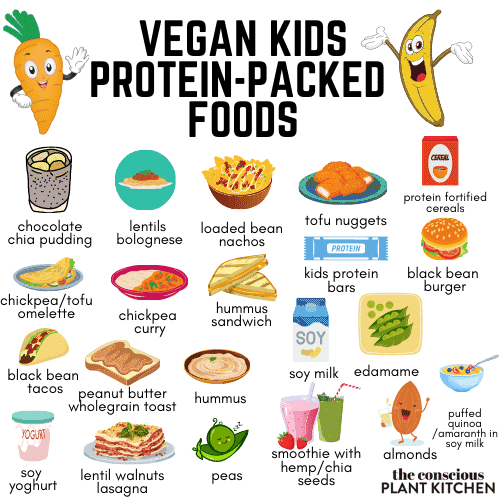
Vegan proteins for kids
It’s easier than you think to add proteins to your vegan kid’s plates. Kids are picky eaters, and they don’t eat a large amount of food per meal. That’s why you must use their favorite food to sneak in protein-packed food.
Below I listed the best vegan protein for kids, including some simple vegan kids meal.
Vegan High-protein recipes
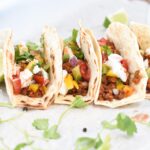
Below I listed some easy vegan protein recipes for you try







Slutsats
While it is not that hard to get enough protein when you follow a vegan diet, getting the right protein requires some understanding.
Our vegan protein source chart is the best way to know where these protein sources are with no hassle!

Smallest amount & kinds of vegetables that will provide total rda of each essential protein
Loves your website .Do you by any chance have a book that I could buy?
Thank you Yola
Thank you! Not yet sorry !
Hello, I just wanted to thank you both for all the wonderful information. It is easy to follow and really helpful thank you x
100g of nutritional yeast is obviously hard to eat in a day because it’s such a volume, but what does 26g of dried lentils turn in to? I wish I could find a chart that uses the measurements that we eat.