

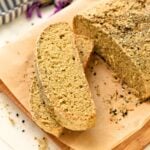
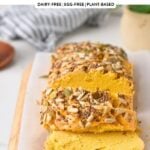
Esta Pão de farinha de grão-de-bico is a high-protein, gluten-free, nut-free, 1-bowl loaf made with no eggs and no dairy with just 6 simple ingredients.

Embora a receita completa esteja logo abaixo, não perca todas as minhas dicas mais adiante, incluindo substituições de ingredientes, dicas de culinária e fotos do passo a passo!
Gostou desta receita?
Deixe um comentar abaixo ou acesse o nosso Facebook onde respondo a (quase) todos os comentários, nosso A página Instagram para inspiração, ou para o nosso Pinterest Para salvar receitas!
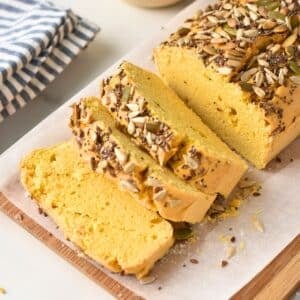
Pão de farinha de grão-de-bico
Ingredientes
- 2 ½ copos Farinha de grão de bico - (nota 1)
- 1 xícara Leite De Soja - (nota 2)
- ⅓ xícara Azeite - (nota 3)
- 3 colheres de chá Fermento em pó
- 2 colheres de chá Vinagre De Cidra De Maçã - (nota 4)
- ¾ colher de chá sal - (nota 5)
Toppings – optional
- 1 colher de sopa Sementes De Girassol
- 1 colher de sopa Sementes de abóbora
- 1 colher de chá Chia Seeds
Instruções
- Preheat the oven to 350°F (180°C). Line a 9-inch x 5-inch loaf pan with parchment paper. Lightly oil the paper with cooking oil spray. Set aside.
- Before you start, shake the bag of chickpea flour, use a fork to fluff the flour, and break lumps. Then, scoop it with a measuring cup. Do not pack the flour, or you will add too much, and the bread will be dry. Scoop, sweep off excess, and add to the mixing bowl.
- Add in salt, baking powder, and use a whisk or a fork to combine and break any flour lumps, pinching them with your fingers if they remain after whisking.
- Add wet ingredients: olive oil, milk, and vinegar.
- Use a rubber spatula to stir everything together until the batter is smooth, runny, and no more lumps of flour can be seen.
- Despeje a massa na forma preparada.
- Sprinkle the optional seed mix on top of the bread for a boost of healthy fats and proteins, or skip this step if you prefer a plain bread.
- Bake the bread on the center rack of the preheated oven for 45 minutes at 350°F (180°C).
- Let it cool down on a cooling rack for 2 hours before slicing.
Notas
Nutrição
Ingredientes e Substituições
You only need 6 ingredients to make the dough. Here’s how to pick them.
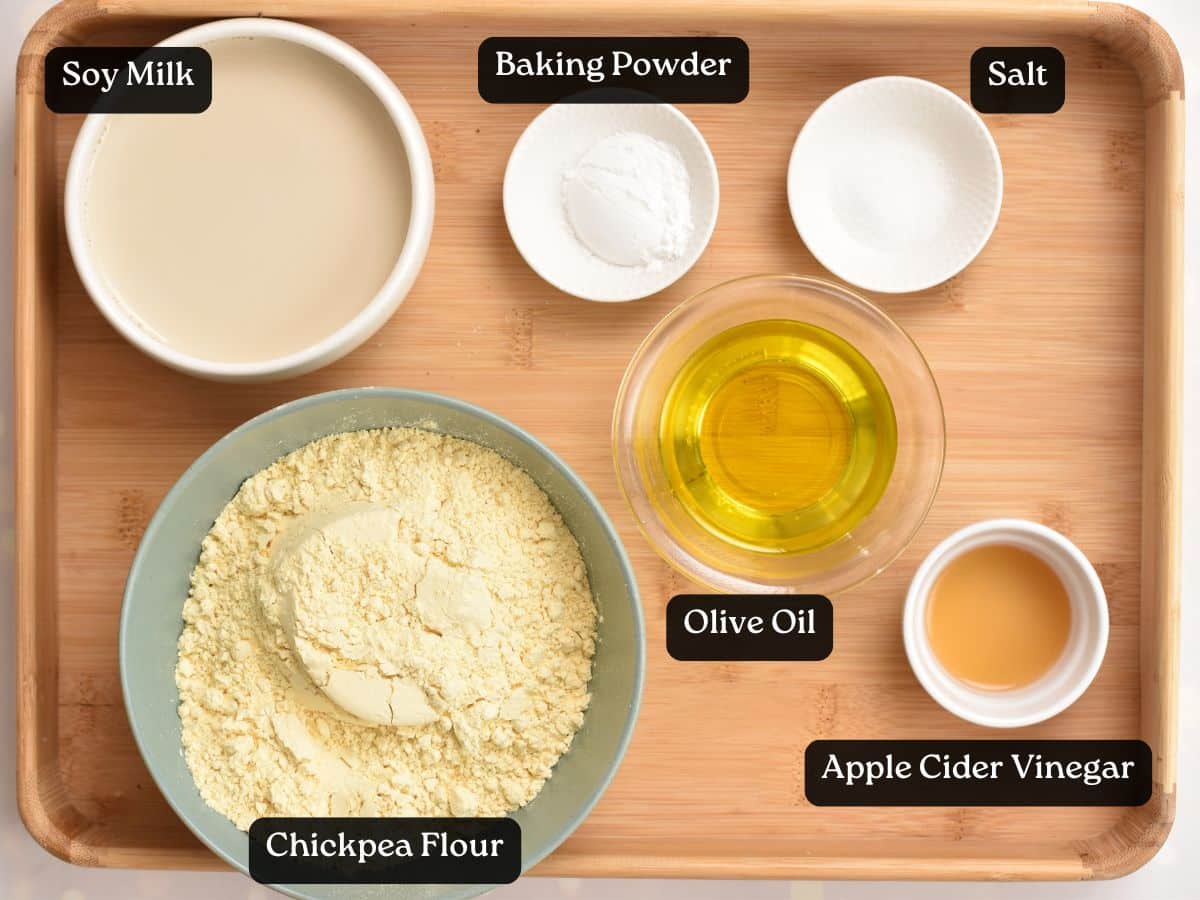
- Farinha de grão de bico – This is the primary ingredient, providing the structure and a high-protein base for the bread. It is also known as gram or garbanzo flour. Note that besan flour, a different type of chickpea flour, will not work for this recipe due to different absorption ratios.
- Leite De Soja – This adds moisture to the batter. You can also use other dairy-free milks or even water. I prefer soy milk for its added protein.
- Azeite – This contributes to the bread’s tenderness and moist texture. The flavor of the oil will be noticeable, so choose one you enjoy, like light olive oil for the best taste. Avocado oil also works but may give the bread a greener color and strong avocado flavor.
- Fermento em pó – This is a leavening agent that helps the bread rise and achieve a light texture.
- Vinagre De Cidra De Maçã – This reacts with the baking powder to help the bread rise. Lemon juice, white vinegar, or lime juice are also good acidic substitutes.
- sal – This enhances the overall flavor of the bread. You can omit it for a sweet bread or swap it for 1/4 cup of sugar or 1 teaspoon of cinnamon.
How to Make Chickpea Flour Bread
This recipe is really easy to whip up in a few minutes. Here’s how in pictures.

Misture os ingredientes secos em uma tigela grande.

Incorporate the wet ingredients until the mixture is smooth.

Transfer the batter to a baking pan lined with parchment paper and add any seeds you like on the top.

Bake the bread on the center rack of the preheated oven for 45 minutes at 350°F (180°C).
Dicas de confeitaria da Carine
Let me share a few more tips to help you make a great chickpea bread even if it’s your first time.
- Flour Type Matters – I am using garbanzo flour, also called gram flour. This is not the same as besan flour, so do not use besan flour for this recipe as it has different liquid-to-dry ratios.
- Measure Flour Carefully – Before measuring, vigorously shake the bag of chickpea flour and use a fork to fluff it, breaking any lumps. When scooping, do not pack the cup. Simply fill the cup and sweep off any excess. Packing the flour can add significantly more flour, resulting in a very dry and dense bread.
- Whisk Dry Ingredients – Before adding any wet ingredients, whisk the dry ingredients together to break up any flour lumps and ensure even distribution of the baking powder and salt.
- Don’t Skip the Oil – The oil is crucial for the bread’s texture. Do not remove or swap the oil for an oil-free option, as this will make the bread super crumbly and dry.




recipe looks good I’m looking forward to using it . I have a problem with gluten and dairy.
Me avise como foi!
Adorei!
Fico muito feliz em saber disso!