


I’ve developed a method to convert all my baking recipes with all-purpose flour (or self-rising flour) into gluten-free recipes. You only need to make a few adjustments to enjoy all the taste and almost the same texture in all my muffins, bread, scones, brownies, and cakes!
You must adjust the recipe according to the instructions provided below.
Gluten-Free Flour Conversion Tool
Determine the exact mixture to replace wheat flour with a customized GF blend.
1. Select Recipe Type
2. Wheat Flour Amount to Replace
3. What type of flour does the recipe call for?
Your Gluten-Free Flour Mixture
You need all of the below:
Select your options above to see the required ingredients.
* Amounts are rounded for practical use. Smallest measurable US amount is 1/8 tsp.
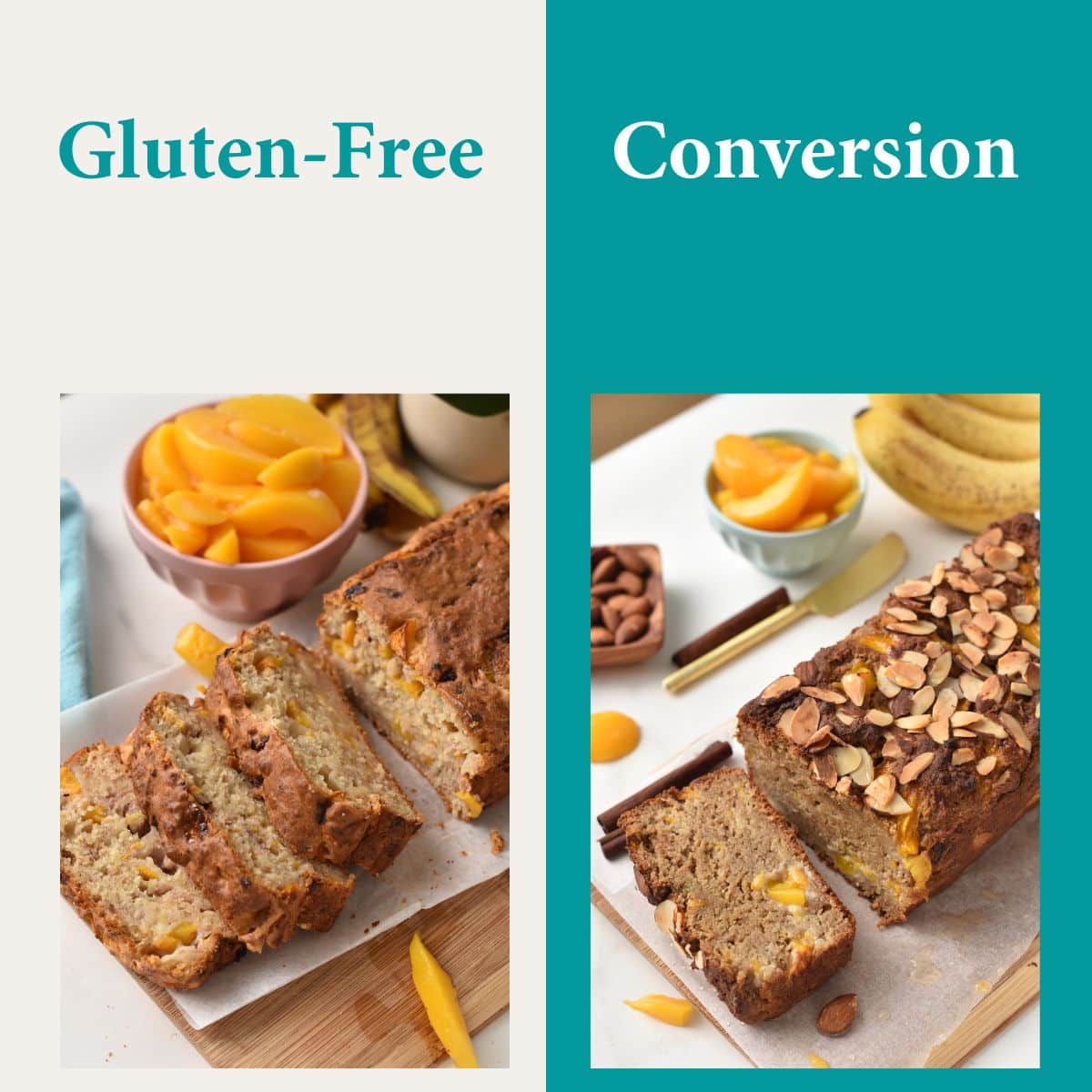
It’s not as simple as just swapping all-purpose flour for all-purpose gluten-free flour. A cake would be gummy, a bagel would be hard as a rock, or brownies would be dense. It’s never a 1:1 ratio because I don’t use eggs in my baking.
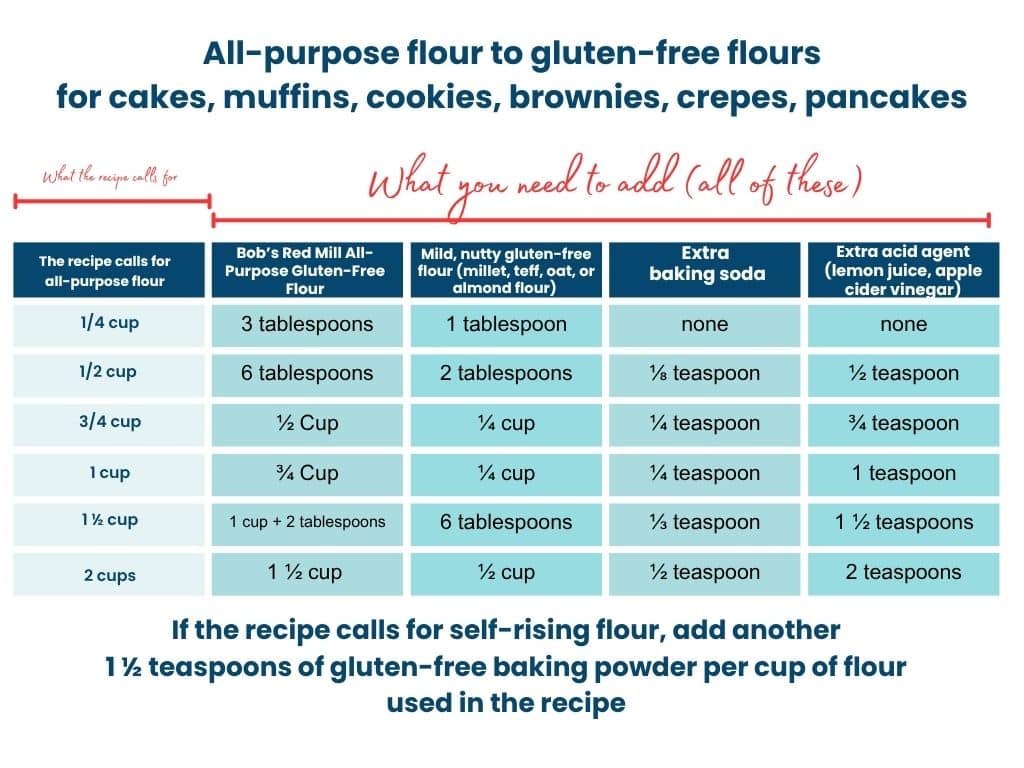
Converting Cakes, Muffins, Brownies, Crepes & Pancakes
When turning a wheat flour recipe into gluten-free, egg-free baking, you need a blend of flours like an all-purpose gluten-free mix and a nutty flour (e.g., teff, millet), along with baking soda and lemon juice. This is due to the absence of gluten and eggs, which are crucial for structure and leavening. Gluten provides elasticity and a framework to trap gases, while eggs contribute protein for structure, fat for richness, and moisture.
In their absence, the all-purpose gluten-free blend offers a base of starches and gums to mimic gluten’s binding properties. Adding nutty flours like millet, teff, or oat flour will add a finer crumb structure, preventing the baked goods from being gummy or too elastic.
Baking soda (a base) and lemon juice (an acid) react to produce carbon dioxide, providing the necessary lift and aeration that eggs would typically contribute, ensuring a lighter, less dense final product.
This combination creates a synergistic effect, compensating for the missing elements to achieve desirable texture and rise.
Converting Bread Recipes (Scones, Bagels, Bread, Cinnamon rolls)
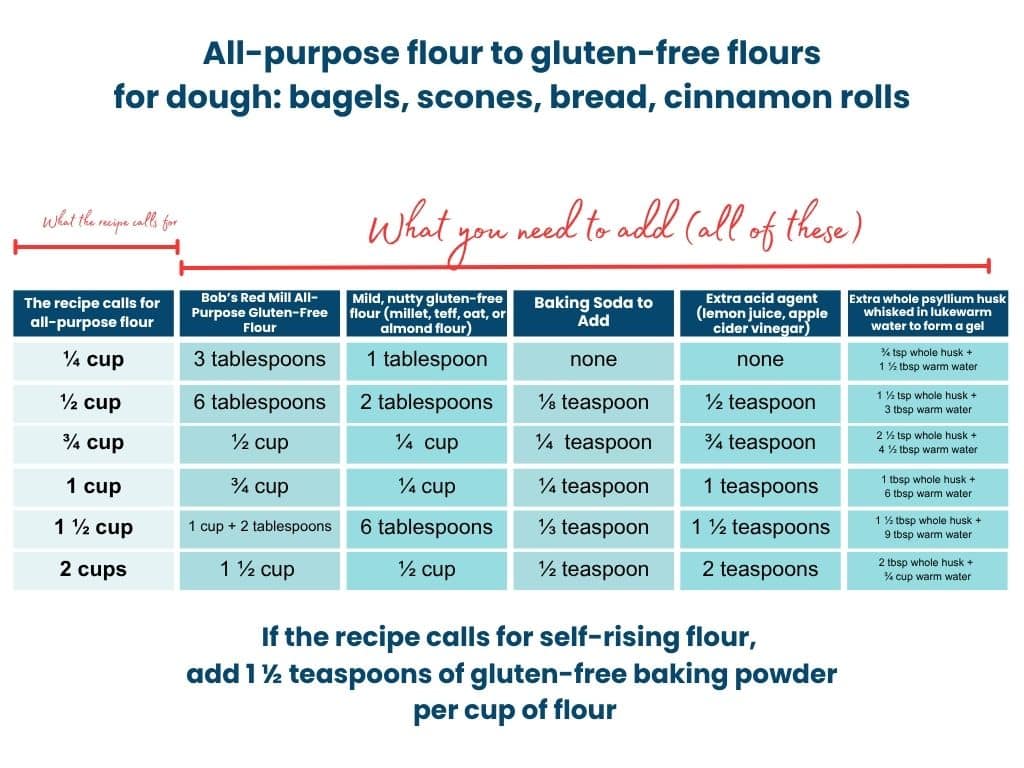
For gluten-free, egg-free doughs like bagels, scones, and cinnamon rolls, which inherently rely on gluten for their chewiness and elasticity, the addition of a whole psyllium husk gel is necessary.
Psyllium husk is a powerful hydrocolloid, meaning it absorbs and retains a significant amount of water, forming a stable, sticky, and slightly stretchy gel. You can’t swap this ingredient for flaxmeal or chia seeds. They won’t be able to reproduce the same chewiness at all.
In traditional baking, gluten forms a network that traps gases produced by leavening agents, giving bread its structure and chewiness. Without gluten, these doughs can become crumbly, dry, and dense, lacking the “bite.” The psyllium gel mimics some of gluten’s properties by creating a kneadable dough that can trap air and hold its shape. This gel network also helps bind the gluten-free flours together, preventing a rocky hard and dry result and instead contributing to a soft, moist crumb and the chewiness you want.
Before you start the recipe, measure all your ingredients. Keep the recipe’s liquid ingredients nearby as you will incorporate them into the husk gel immediately.
- First, whisk vigorously the whole psyllium husk and lukewarm water to form a thick gel paste.
- Immediately incorporate any of the remaining liquid ingredients of the recipe, like dairy-free milk, lemon juice, oil, etc.
- Add the wet ingredients to the remaining dry ingredients of the recipe to form the dough.
Ingredients you Need
To make your gluten-free flour mix, you need:
- All-Purpose Gluten-Free Flour: I recommend Bob’s Red Mill Gluten-Free
- Millet Flour: I recommend Bob’s Red Mill Stoneground Millet
- Baking Soda
- Lemon Juice or Apple Cider Vinegar
- Psyllium Husk (for bagels, scones, bread, rolls)
- And to make Self-Rising Flour: Gluten-Free Baking Powder.
What Should I Expect?
With gluten-free flour alternatives, you will get a very similar taste to what you get with wheat flour, however, the texture will be a bit different.
Gluten-free baking will give a slightly denser, slightly gummier texture than regular flour.


Hello. Do we have to use gluten free all purpose flour or can we just use millet or teff as our only flour in the recipe? Thanks!
Yes, you need the all-purpose gluten-free flour as a base, or the recipe will be a total fail.
Thank you. I saved this for all the breads I wanted to make for my family.
That’s great! let me know when you bake something.
Merci beaucoup pour tous ces renseignements
c’est pationnant et très intéressant
Merci !
Appreciate your recommendations and conversion chart. New to baking, gluten free.
Thanks so much
Thanks a lot!
I love your recipes!!! ❤️
How can a receive a printed guide of your gluten free conversion? Thank you
Click right on the image to open in a new tab, then you can send it to the printer if you click right on the image.
Thank you so much!
Thank you for such a great alternative for gluten-free consumers. I look forward to trying this recipe!
Thanks ! I am glad you found me.
Does gluten free flour work 1:1 if we use eggs? I am LOVING your recipes. I do prefer gluten free , and I don’t mind eggs once in a while, but I’m still learning about substitutes and replacements.
I never bake with eggs so I can’t recommend unfortunately.
Thanks for the conversion charts. I love to bake and it’s easier having a chart to go by when so many people need SF or gluten free baked goods anymore.
Thanks ! I am glad it help you.
Then you for sharing all your recipes. I can’t seem to print or save the conversion tables. Can you send them to me via email? Thank you
All you have to do is a right click on the table, it will open in another tab. From there, send it to your printer.
Hi Carine,
Thank you so much for the time to share with us all the recipes and tips! It´s soo good to have all these informations, so we don´t need to try and do it wrong!
You guys are brilliant!
The only question is if I can replace the oat flower with other grain, for example chickpeas or lentils? Would it work perhaps? I´m going low glicemic index, oat is not.
Tks a million
Thanks for this lovely message. Oat flour is difficult to swap, it will definitely not swap well for bean flours. Sometimes, half of oat flour and half almond flour work but you will miss fiber and the texture will be softer meaning your baked goods might fall apart or be mushy.