

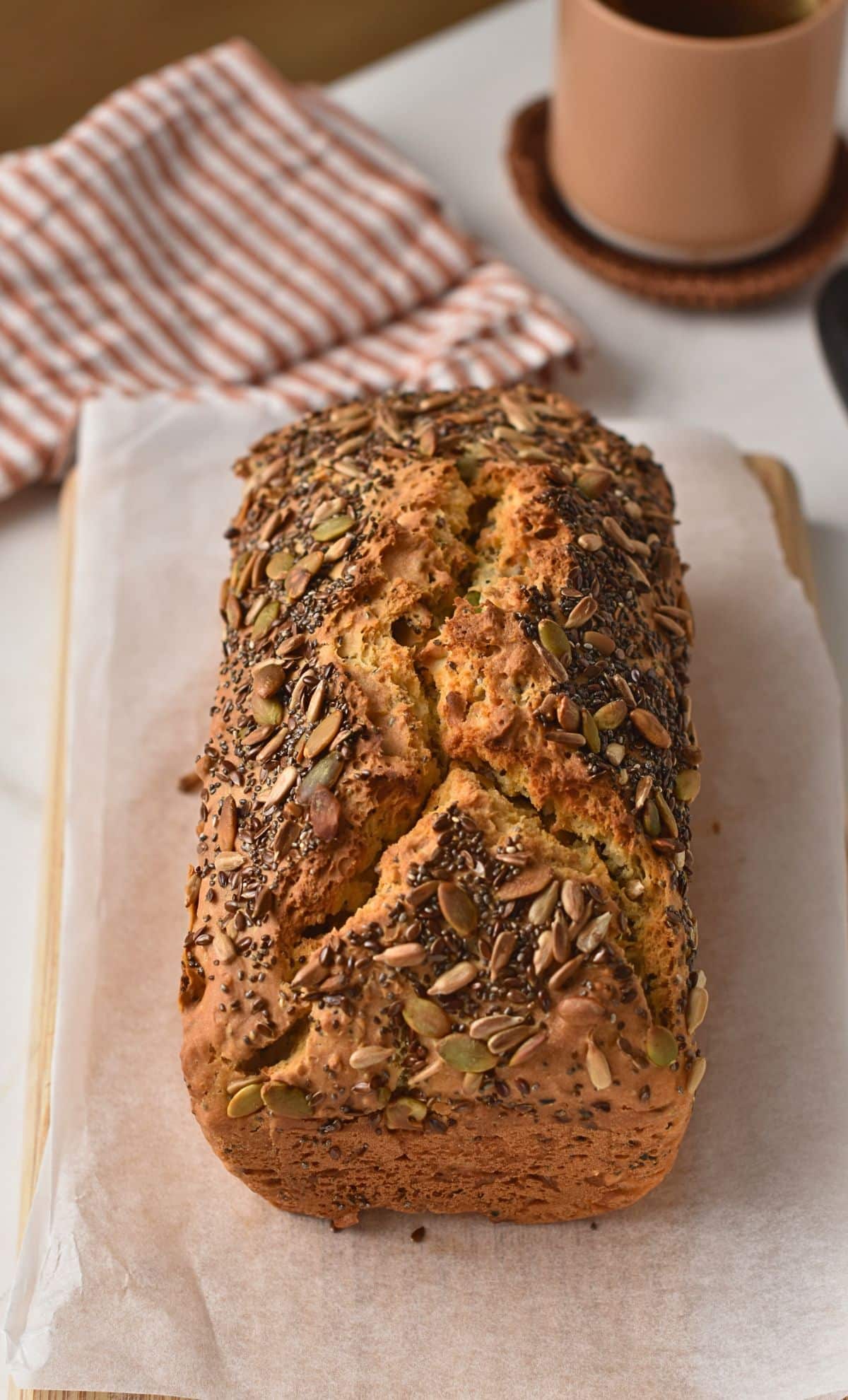
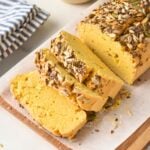
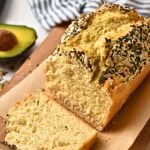
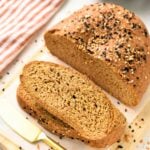
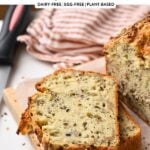
This Yogurt Bread is a simple 4-ingredient, yeast-free loaf recipe rich in protein and micronutrients and made with no dairy, no eggs for a soft crumb with crusty edges.
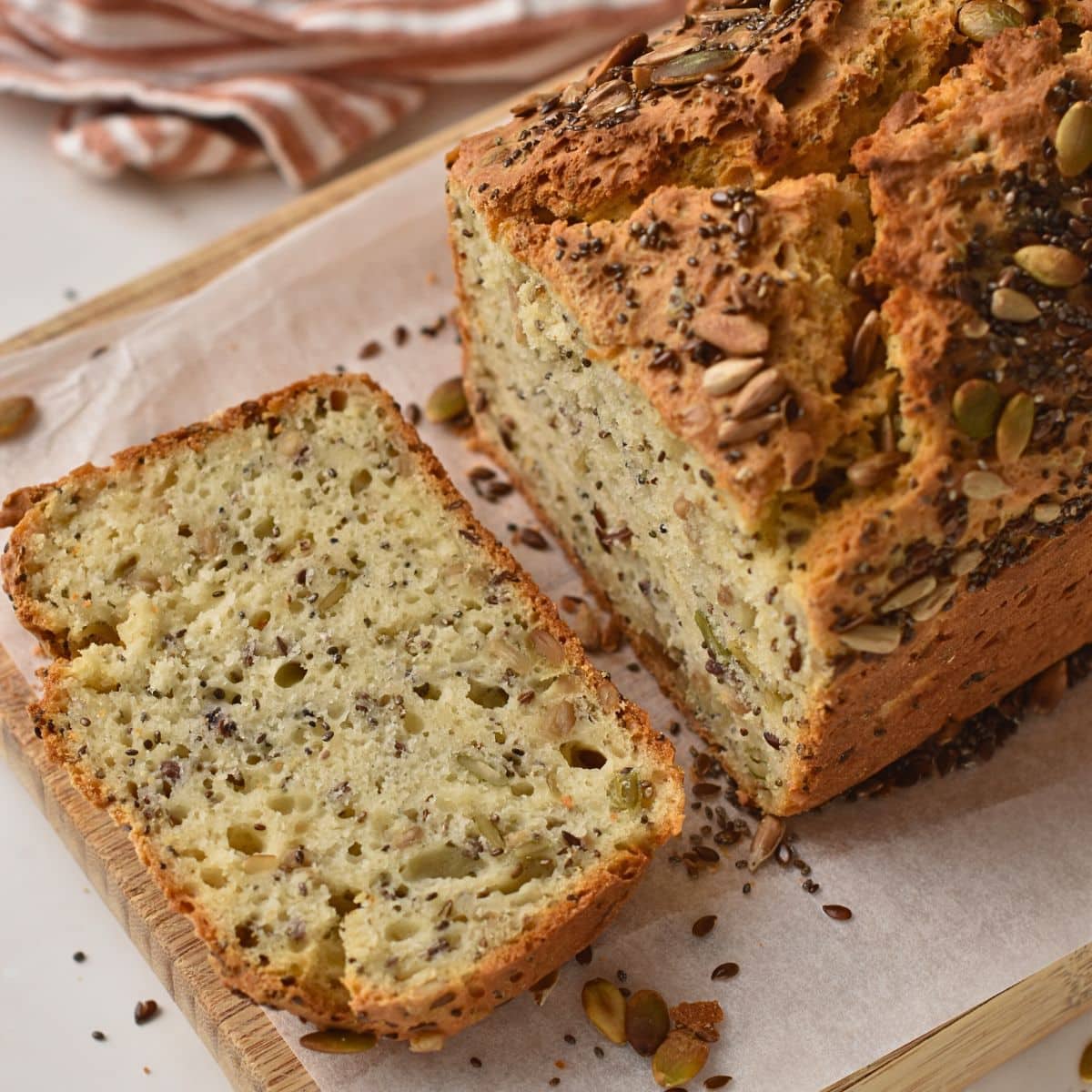
While the whole recipe is just below, don’t miss all my tips further down, including ingredient swaps, my cooking tips, and step-by-step shots!
Like This Recipe?
Leave a comment below or head to our Facebook page where I reply to (almost) all comments, our Instagram page for inspiration, or our Pinterest for saving recipes!
Yogurt Bread
Ingredients
- 3 cups Self-Rising Flour - (note 1)
- 1 cup Dairy-Free Yogurt - (note 2)
- ¼ cup Olive Oil - (note 3)
- 1 ¼ cups Soy Milk - (note 4)
Optional
- 1 teaspoon Salt
- ½ cup Mixed Seeds - (note 5)
Instructions
- Preheat the oven to 390°F (200°C). Line a 9-inch x 5-inch loaf pan with parchment paper, lightly oil with cooking oil spray. Set aside.
- In a mixing bowl or a stand mixer using the hook attachment, add all the ingredients.
- Stir until it forms a sticky batter. Fold in the seeds if used, and stir to incorporate.
- Pour the batter in the prepared loaf pan, and if you like, sprinkle more seeds on top.
- Bake the bread on the center rack of the oven for 55-65 minutes at 390°F (200°C), foiling the top of pan after 35 minutes. Check the baking by inserting a long thin skewer into the center of the bread, if it comes out clean, it's ready to remove from the oven.
- Let it cool down completely on a cooling rack before slicing – about 3 hours.
Notes
Nutrition
Ingredients and Substitutions
You only need 4 simple ingredients to make this recipe. Here’s how to pick and swap them.
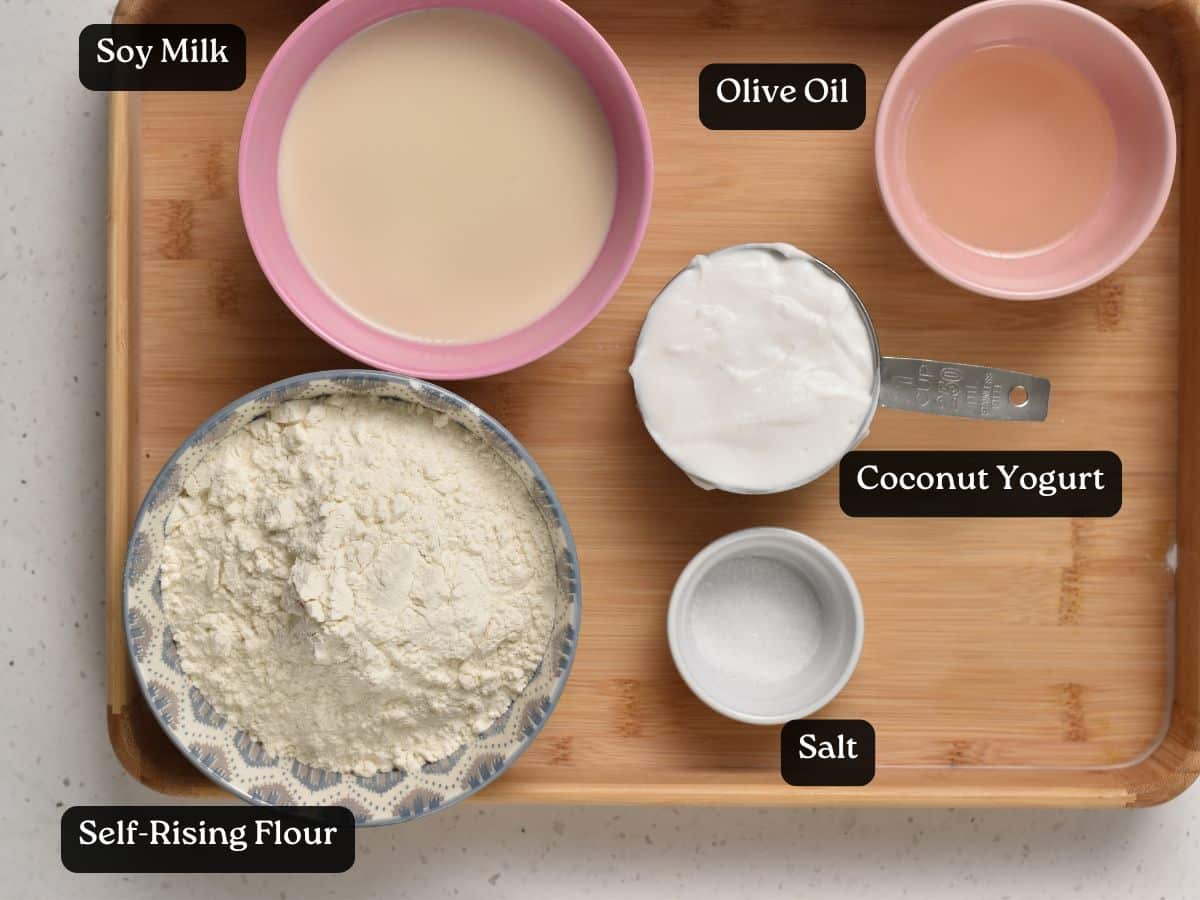
- Self-Rising Flour – This forms the base of the bread, providing structure and the necessary leavening to help it rise without yeast. If you don’t have it, you can make your own by combining all-purpose flour with baking powder. For a gluten-free option, use my gluten-free converter, but don’t forget the baking powder.
- Dairy-Free Yogurt – This is a key ingredient that adds moisture, tenderness, and a slight tang to the bread, contributing to its soft crumb. Plain soy yogurt or coconut yogurt work well.
- Olive Oil – This contributes to the bread’s moistness and tender texture. You can use any other light-flavored oil if you prefer.
- Soy Milk – This provides liquid to the batter and helps create the right consistency, while also adding a protein boost. Almond milk or oat milk are also great choices.
- Salt – This optional ingredient enhances the flavors of the other ingredients and balances the taste of the bread.
- Mixed Seeds – These are an optional add-in that provide a nice crunch and extra nutrients. You can use a mix of pumpkin, sunflower, flax, and chia seeds.
How to Make Yogurt Bread
Do you prefer a few pictures? These shots of key steps can help!
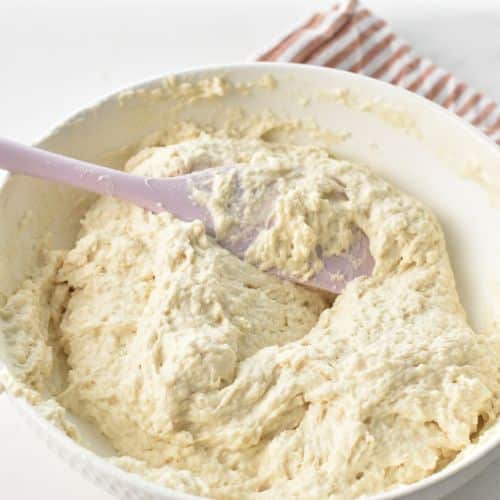
Yogurt Bread dough combined in a bowl.
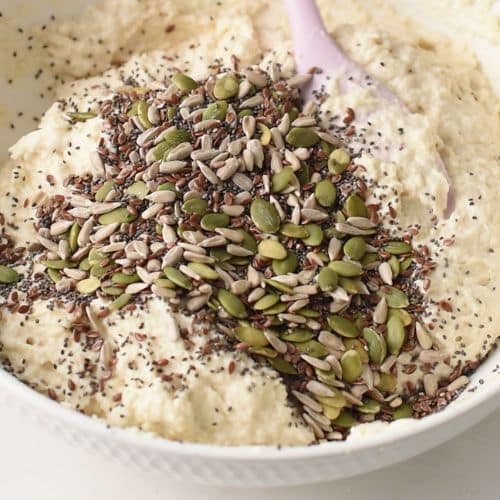
Seeds added to the dough.
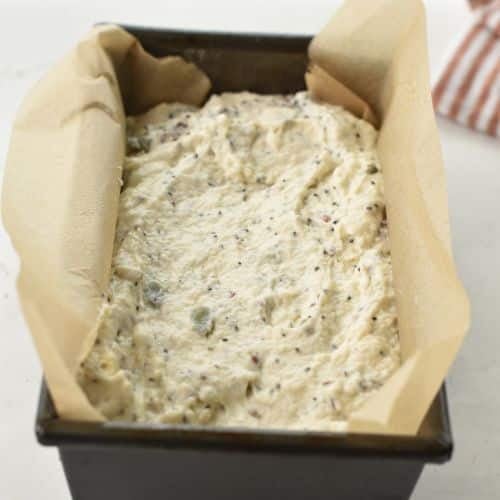
Yogurt Bread dough in a loaf pan.
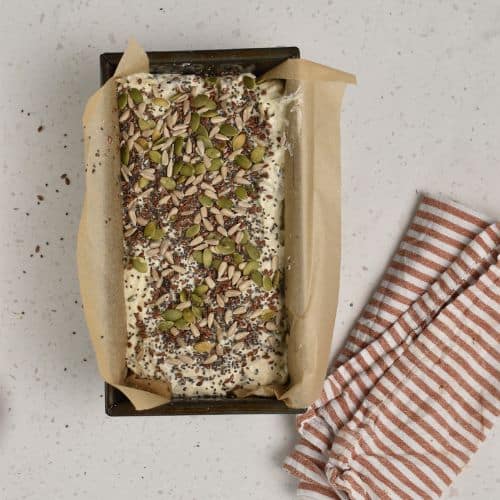
More seeds on top of the Yogurt Bread loaf.
Carine’s Baking Tips
Let me share a few more tips for a perfect yogurt bread loaf.
- Choose Full-Fat Yogurt – For the best texture and moistness in your bread, use a plain, full-fat dairy-free yogurt. This helps achieve that soft crumb.
- Don’t Overmix – When combining the ingredients, stir just until they form a sticky batter. Overmixing can develop the gluten too much, leading to a tougher bread.
- Customize Your Flour – If you want to increase the fiber content, consider using white whole wheat flour or a half-and-half mix of self-rising and white whole wheat flour. Remember to add baking powder if you’re using regular all-purpose or whole wheat flour, as noted in the recipe.
- Add Extra Crunch – Don’t hesitate to stir mixed seeds into the batter for a boost of protein and a delicious crunch throughout the loaf. You can also sprinkle extra seeds on top for visual appeal and more texture.
- Foil for Golden Top – Foiling the top of the loaf pan after about 35 minutes of baking is a crucial step. This prevents the top from over-browning while the inside finishes baking through.



thanks again for another great recipe and concise directions to make
I love that!
Judging by the size of your loaf tin in the photos, it looks to be about 12cm. I only have a 25cm loaf tin, will the mix be enough?
I always bake with a 9×5 inches loaf pan.
It was perfect. The taste, the moisture, lasted for days. All really good
Thank you
The yogurt bread recipe was delicious. The only thing I found it very sticky and difficult to add the seeds. I would definitely make it again.
Thank you,
Yes, the batter is sticky, you can add the seeds with the flour, so it incorporate easily as you stir everything togehter.
Hi, can you please confirm what ingredients to omit when using the gluten free converter?
Do I still include the yoghurt etc?
Of course, it’s a yogurt bread the gluten-free converter is only here to replace the self-rising flour by a bunch of dry ingredients that will mimic the gluten function in the bread. But as mentioned in the note, this bread has a gummier, denser texture with gluten-free flour because of the high moisture content from yogurt.
I thought possibly to use almond flour or chickpea flour instead but not sure if it will hold. what is the best flour to use if you want to use other plant based flour?
The recipe will never firm up with almond flour, it will be a warm soupy texture. With chickpea flour it will be rock, dense and hard since there’s no gluten to raise the bread. The only swap are white spelt flour in which you need to add 1 1/2 teaspoon baking powder per cup of flour.
Can’t wait to try this Many Thanks.
I look forward to hear your feedback on these.
What size loaf pan?
Everything is well written above in the recipe card
I used whole wheat flour and almond milk. I also divided the bread into biscuits because the dough was heavy. The bread turned out perfectly & was delicious.
The batter is not supposed to be heavy but since you mentioned using wholewheat flour, it explain why the texture is so different. Glad you still enjoy it!
ok so I used 10% fat yoghurt, and almond milk, but the rest was exactly as you stated… but mine came out really stodgy and and squidgy… any idea as to where I went wrong?
The swap to almond milk removes the essential protein “scaffolding” provided by soy milk, causing the bread’s structure to collapse into a dense, stodgy mass. Simultaneously, the higher water content in the 10% yogurt over-hydrates the starches, resulting in a gummy, “squidgy” interior that cannot properly set during baking.
thanks for the reply. but you mentioned in the notes that almond milk would work ? so can I continue to use the almond milk, but instead use full fat yoghurt next time or is there a combination im missing ? I dont like soy milk hence the almond … thanks Sinead
Yes, my recipes swaps are here to give you options, but as soon as you use one swap you change the chemistry of the recipe and you can’t expect the exact same texture, or taste. If you use one swap, usually you won’t see much of a difference, 2 swaps are noticeable, 3 it’s a new recipe and you can’t expect the result seen in my pictures. I don’t think swapping soy milk for almond milk makes a noticeable difference if you use regular full-fat yogurt (I baked this with dairy-free coconut yogurt), I tried almond milk and it was great. I think your main issue is your yogurt that adds too much moisture