


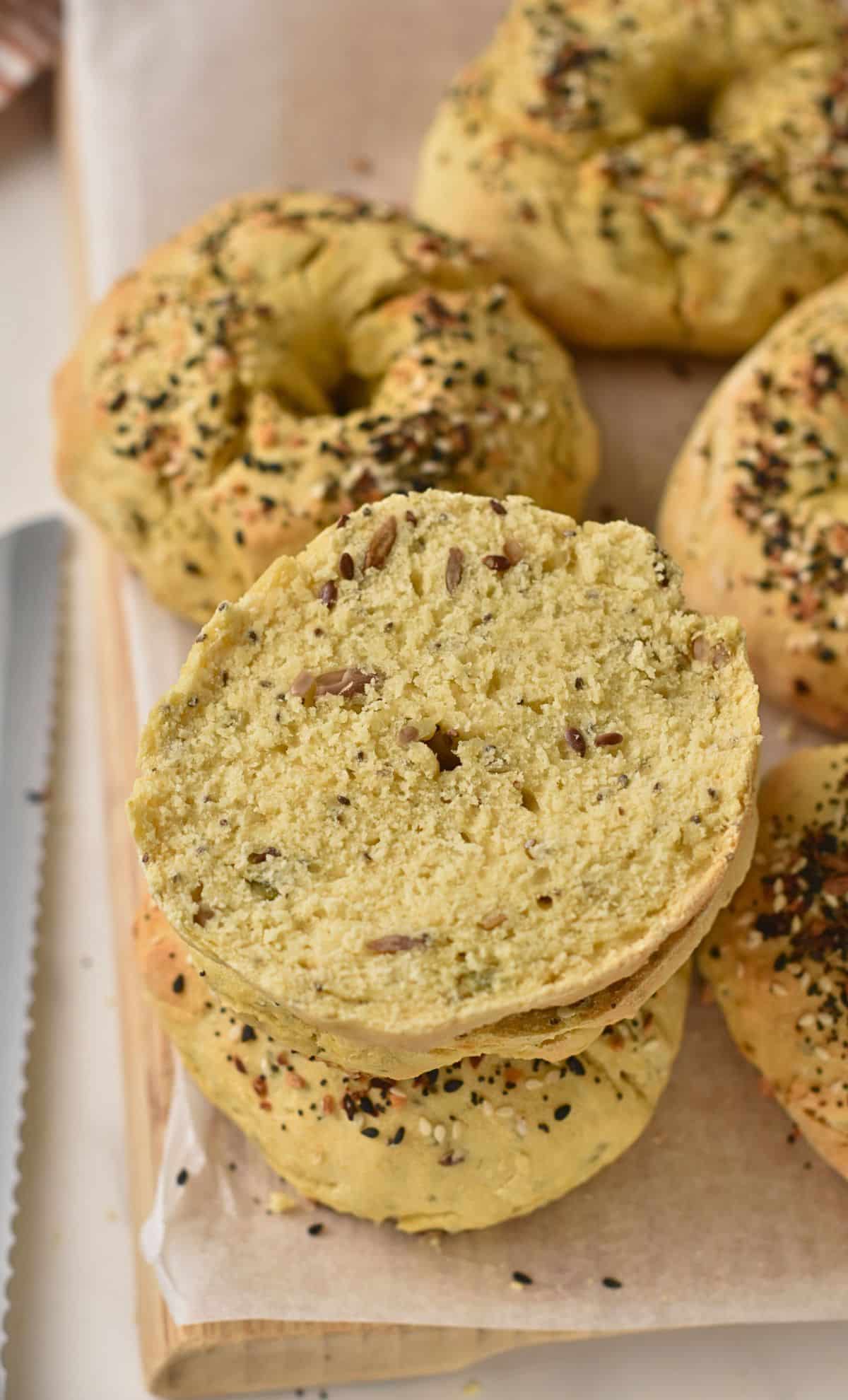
These Protein Bagels are dairy-free, egg-free, yeast-free, plant-based bagels loaded with over 15 grams of natural protein, packed with fiber, healthy fats, and minerals.
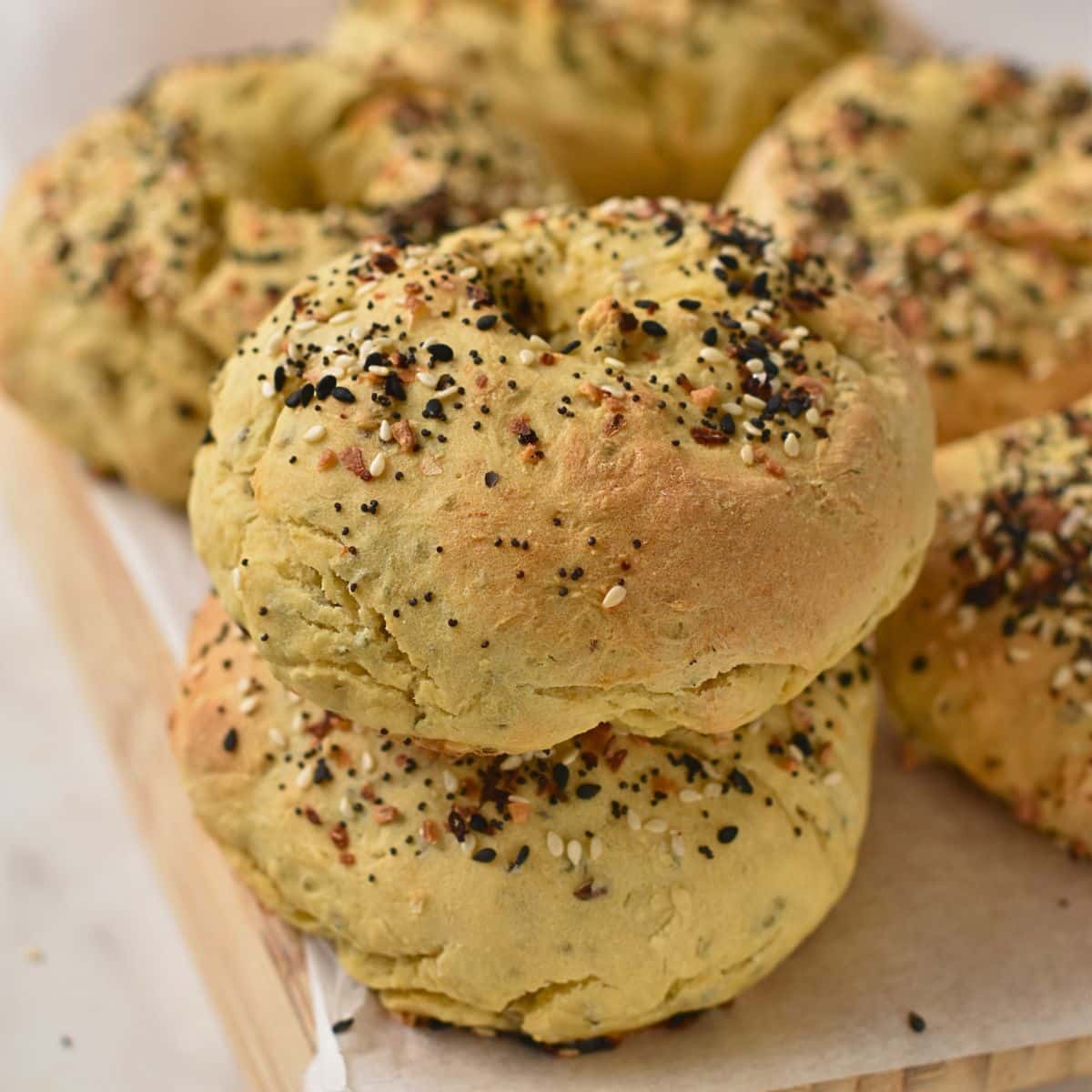
While the whole recipe is just below, don’t miss all my tips further down, including ingredient swaps, my cooking tips, and step-by-step shots!
Like This Recipe?
Leave a comment below or head to our Facebook page where I reply to (almost) all comments, our Instagram page for inspiration, or our Pinterest for saving recipes!
Protein Bagels
Ingredients
- 1 can Chickpeas - 15 ounces (425g) undrained (note 1)
- ⅔ cup Soy Milk - (note 2)
- 3 ¼ cups Self-Rising Flour - (note 3)
- 2 tablespoons Mild-Flavor Olive Oil - (note 4)
- ½ teaspoon Salt - (note 5)
Add-Ins (note 6)
- ¼ cup Sunflower Seeds
- 2 tablespoons Pumpkin Seeds
- 1 tablespoon Chia Seeds
- 1 tablespoon Flaxseeds
Topping
- 2 tablespoons Sesame Seeds
Instructions
- Preheat the oven to 400°F (200°C). Line a large baking sheet with parchment paper. Set aside.
- If using seeds, add them all in a bowl, and stir to combine evenly. Set aside.
- In a large mixing bowl, add self-rising flour and salt if used.
- In a blender, add the can of chickpeas with its liquid, soy milk, and oil. Blend on high speed until smooth.
- Pour the chickpea mixture onto the dry ingredients. Add seeds now if using.
- Stir with a rubber spatula at first until it starts to form lumps. Oil your hands with a bit of olive oil, knead, squeeze, and press the ingredients until they form a dough ball. If the dough is too dry, add a little water to the soy milk it together. If it's too wet, sprinkle extra flour, but don't over-saturate the dough with flour. It should be soft and not sticky outside.
- Divide the dough into 6 equal portions, shape a nice round ball, press to flatten between floured hands, then push your thumb in the center of the disc and swirl to form a bagel shape.
- Transfer to the prepared baking sheet, leaving two inches of space between each bagel – they expand in the oven.
- Brush the top of the bagels with a little soy milk, and sprinkle any seeds or bagel seasonings on top, if desired.
- Bake the bread on the center rack for 20-25 minutes at 400°F (200°C) until golden brown and a toothpick inserted in the center of one bagel comes out clean.
- Cool down on a wire rack and eat lukewarm or cold for breakfast.
Notes
Nutrition
Ingredients and Substitutions
You only need 5 simple ingredients to make this recipe. Here’s how to pick and swap them.

- Chickpeas – These are the star of the show, providing a significant amount of plant-based protein and fiber, and they also contribute to the unique texture of the bagels. It’s important to use the entire can, including the liquid.
- Soy Milk – This adds liquid to the dough and boosts the protein content of the bagels. You can also use other milks like almond milk or oat milk.
- Self-Rising Flour – This forms the main structure of the bagels and contains leavening agents that help them rise without yeast. If you’re using all-purpose flour, you’ll need to whisk in baking powder separately. For a gluten-free option, use my gluten-free converter, but don’t forget the baking powder.
- Light Olive Oil – This contributes to the dough’s texture and makes it easier to handle. Any other light-flavored oil will also work.
- Salt – A touch of salt enhances the flavors in the bagels. You might want to skip this if you plan to use salty bagel seasonings on top.
- Sunflower Seeds, Pumpkin Seeds, Chia Seeds, Flaxseeds – These are optional add-ins that provide extra protein, fiber, healthy fats, and a light crunch. You can swap these for other seeds you enjoy.
- Sesame Seeds – These are used as a topping to give the bagels a classic look and nutty flavor.
How to Make Protein Bagels
If you like pictures, here are a few shots of how I made the bagels.
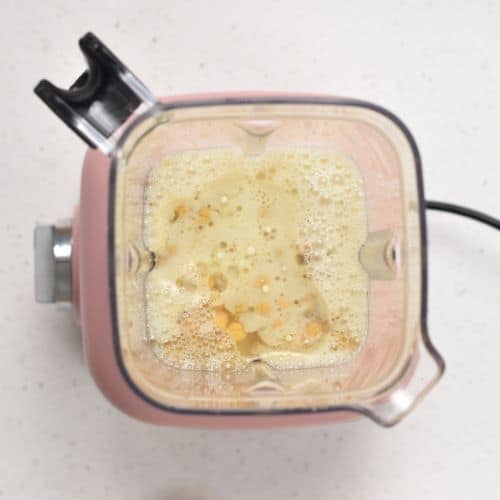
Chickpeas with their water and other liquid ingredients in a blender.
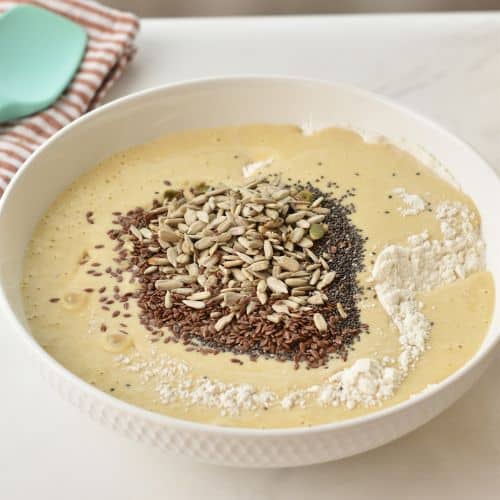
Flour and seeds added to the protein bagel batter.
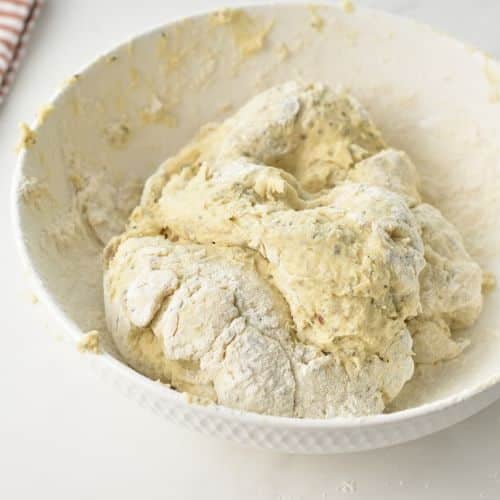
Protein bagel dough mixed in a bowl.
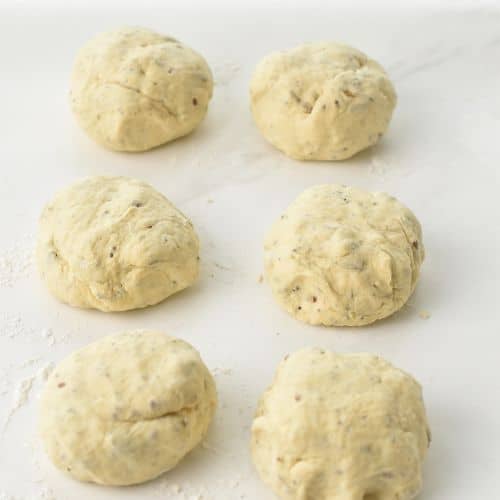
Dough split into 6 small dough balls.
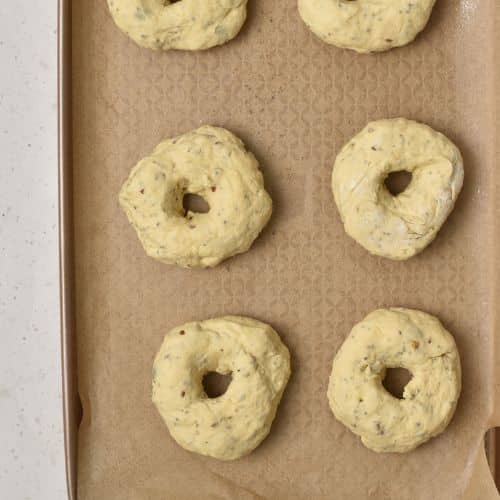
Protein bagels formed on a baking pan.
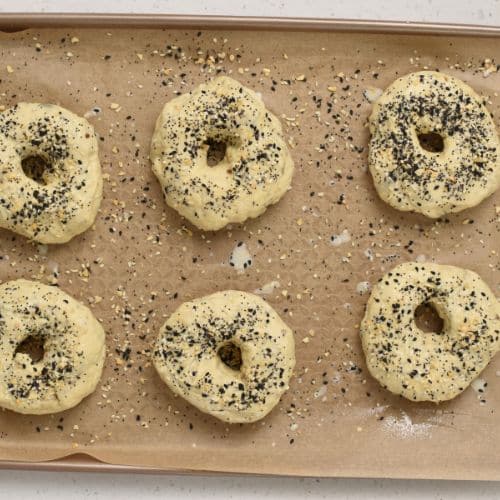
Seeds sprinkled on protein bagels before baking.
Carine’s Baking Tips
Let me share a few more tips for perfect protein bagels.
- Don’t Drain Chickpeas – It’s really important to use the entire can of chickpeas, including the liquid (aquafaba). This liquid plays a crucial role in the bagel’s texture and moisture.
- Adjust Dough Consistency – The dough should be soft and not sticky. If it feels too dry, add a tiny bit more soy milk. If it’s too wet, sprinkle in a bit more flour, but avoid adding too much, as that can make the bagels tough.
- Knead with Oiled Hands – Oiling your hands slightly with olive oil makes kneading the sticky dough much easier and prevents it from sticking to you.
- Shape Uniformly – When shaping the bagels, try to make each portion as equal in size as possible. This ensures they bake evenly. When making the hole, you can also use a floured finger to gently widen it as you swirl.
- Savory Focus – These bagels naturally lean towards savory flavors due to the chickpeas’ subtle taste. If you’re making them savory, consider adding garlic powder or your favorite spices to the dough.
- Sweet Variation – If you’d like a sweeter bagel, try adding about 1/4 cup of sugar (like coconut sugar) and 2 teaspoons of cinnamon to the dough.
- Control Saltiness – If you’re planning to use a salty bagel seasoning as a topping, definitely skip the salt in the dough. This prevents your bagels from becoming overly salty.






perfect
Hi, can these be made gluten free? if so, what flours can be used? thanks
They are very hard and dense with GF all purpose. Almond flour and oat didn’t work well either I am sorry.
Can you use gluten free flour with this recipe?
No, sorry the texture is very hard and dry, like a rock.
what about with whole wheat flour? or oat flour?
Oat flour doesn’t work, you will end up with a rock hard piece of dough. Wholewheat make them dense, they won’t raise much, because it will be too much fiber in the dough with the chickpeas. To keep the texture as a bagel, you must follow the recipe as per written.
Looks delish! Have you tried using whole wheat flour?
Not yet, if you do, remember that you need to add the baking powder that is naturally present in self-rising flour. Ratio is my recipe note. Also, wholewheat flour will absorb more liquid, it means you will need more liquid to bring the dough together, and they won’t raise as much.
hey,
I am looking forward to trying this. any advice on storage? Also, have you tried freezing them?
Sure, the instruction for storage is in the recipe card note : Store 2 days at room temperature, wrapped in a clean kitchen towel. Or freeze in Ziploc bags for up to 1 month and thaw at room temperature the day before eating. You can freeze them too for up to 1 month in zip bags.
Thank you for sharing this recipe!
My pleasure! I am glad you like it.
hello I watch the video from South Africa looks. health good yummy
Amazing! Welcome here with me. I hope you bake something you love.
Could I use a sourdough starter in this recipe? If so, how much would you recommend? Thank you.
I frequently add sourdough starter to my recipes. As it’s (generally) 50:50 water to flour ratio it’s doesn’t alter the consistency of the dough. So then it just depends on whether you want to use it as a leavening or just for flavour as you would use sourdough discard (in which case just add about 50g to the mix), if you want it to rise your bagels then I’d mix the dough with starter the night before, leave it over night in a warm spot to rise, shape in the morning, let them start to puff up (an hour or 2) then bake. I haven’t tried with this recipe but that’s my usual approach
thanks for sharing!
I have never made a sourdough starter yet, I don’t have the patience I guess 🙂 So I am not too sure how to incorporate this into the recipe.
helloooo..looks delightful, but.
can I make these with GLUTENBFREE FLOUR
PLEASE PleASE
thanks
It come out pretty dense, and hard with all-purpose gluten-free flour. I don’t recomment that. But you can make my almond flour bagels, or quinoa bagels for gluten-free options.
Could you use chickpea flour instead of all purpose flour and add the baking powder?
No, it will be hard like a rock.