


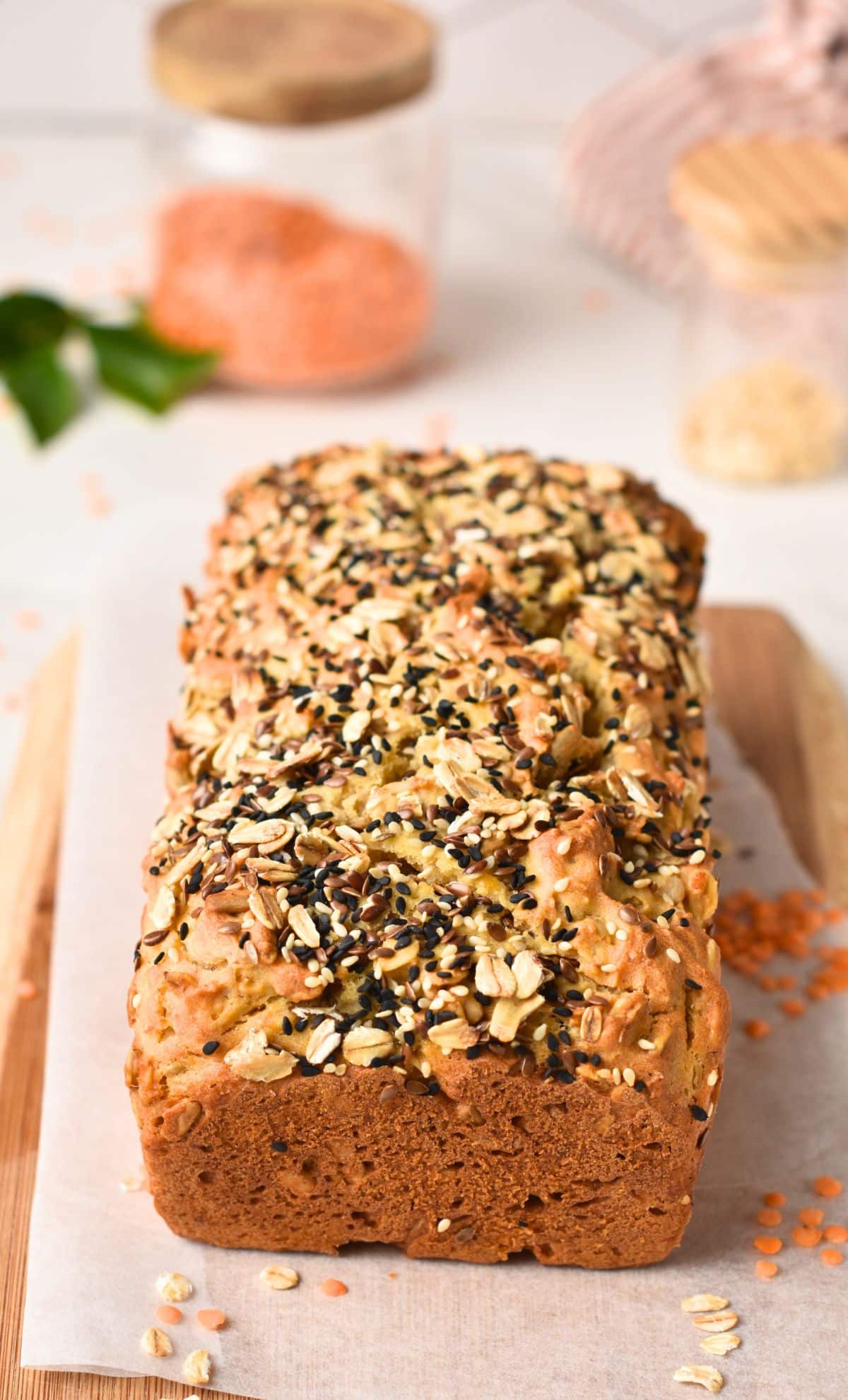
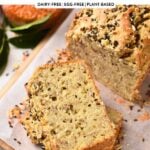
This Protein Bread is an easy sandwich bread packed with 10 grams of protein and 7 grams of fiber from natural ingredients and no eggs, no dairy!
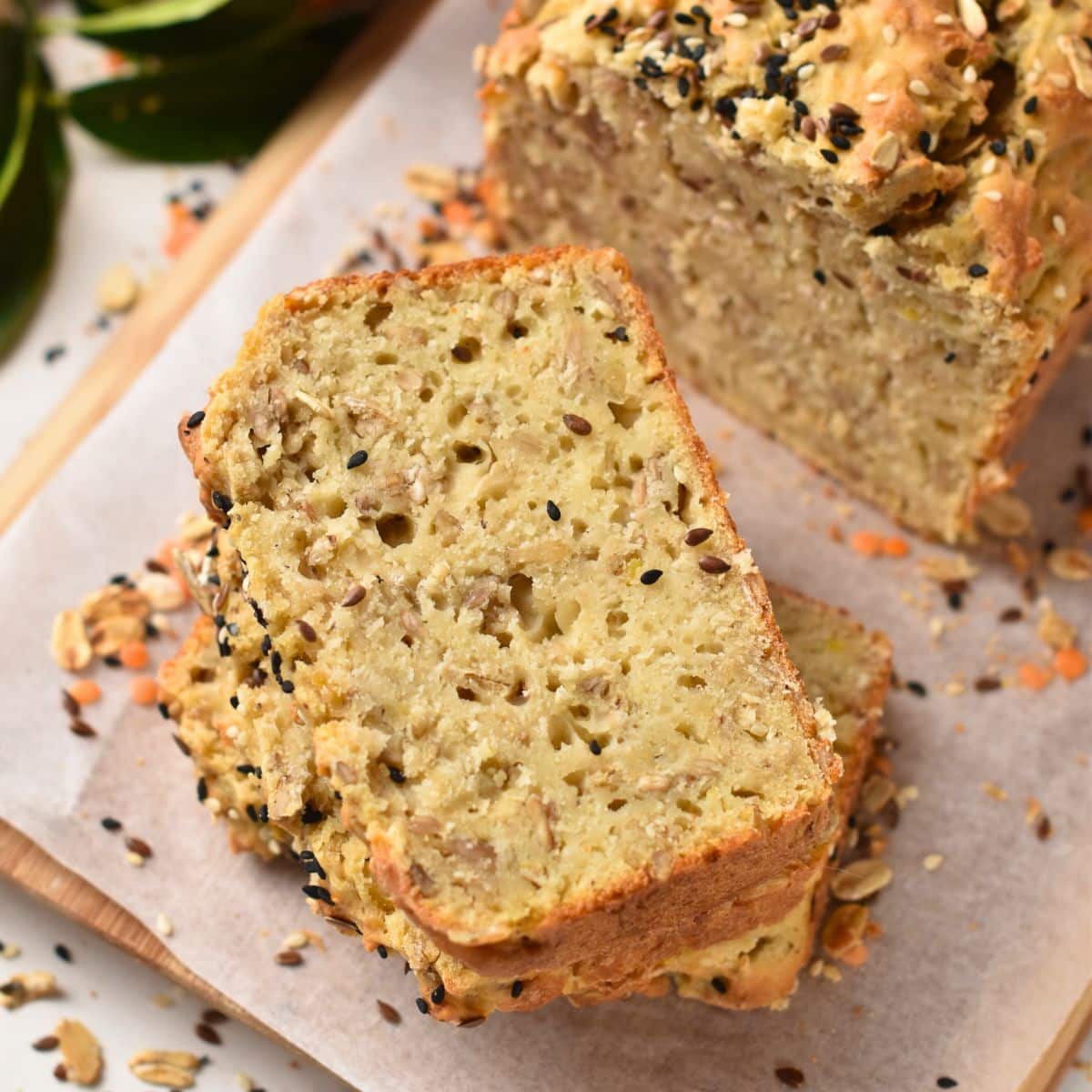
While the whole recipe is just below, don’t miss all my tips further down, including ingredient swaps, my cooking tips, and step-by-step shots!
Like This Recipe?
Leave a comment below or head to our Facebook page where I reply to (almost) all comments, our Instagram page for inspiration, or our Pinterest for saving recipes!
Protein Bread
Ingredients
To cook the lentils
- 1 cup Red Lentils - (note 1)
- 1 ⅓ cups Water - – to cook the lentils
Bread batter
- 2 ½ cups Self-Rising Flour - (note 2)
- ¾ cup Soy Milk - (note 3)
- ⅓ cup Olive Oil - (note 4)
- 1 cup Old-Fashioned Rolled Oats - (note 5)
- ½ cup Sunflower Seeds - (note 6)
- ½ teaspoon Salt
To roll the breads
- 1 teaspoon Flaxseeds
- 1 teaspoon Sesame Seeds
- 1 teaspoon Sunflower seeds
- 1 teaspoon Rolled Oats
Instructions
- Line a 9 x 5-inch loaf pan with parchment paper and let it overhang on the sides to make it easier to pull the bread out of the pan later. Set aside.
- Place the red lentils in a glass bowl, cover them entirely with cold tap water. Stir with a fork and let them soak 10 minutes or up to overnight.
- Drain and rinse a few times under cold tap water.
- Place the soaked, drained red lentils and 1 1/3 cups water in a saucepan. Cover with a lid, bring to a boil, then reduce heat to low-medium and keep cooking for 12-14 minutes until the red lentils are soft and mushy.
- Place the warm, cooked red lentils in a mixing bowl. If there's a bit of water in the saucepan, add it to the bowl, but you shouldn't have much left if the red lentils are well-cooked, all the water should be absorbed.
- Add the remaining ingredients: self-raising flour, oats, oil, milk, seeds, and salt.
- Use a rubber spatula to stir and form a consistent, sticky bread dough. If it looks too runny, add a little more flour.
- Set the batter aside for 10-15 minutes. Meanwhile, preheat the oven to 430°F (220°C).
- Pour the bread batter into the loaf pan. Sprinkle the mix of seeds on top if used.
- Bake the bread for 30 minutes at 430°F (220°C).
- Remove the bread from the oven. Cover the pan with a large piece of foil.
- Turn the temperature of the oven down to 400°F (200°C).
- Return the bread to the oven for 20 minutes on the center rack
- Let the bread cool down for 5 minutes in the pan, then for 3 hours or overnight on a cooling rack before slicing.
Notes
Nutrition
Ingredients and Substitutions
You only need a few simple ingredients to make this recipe. Here’s how to pick and swap them.
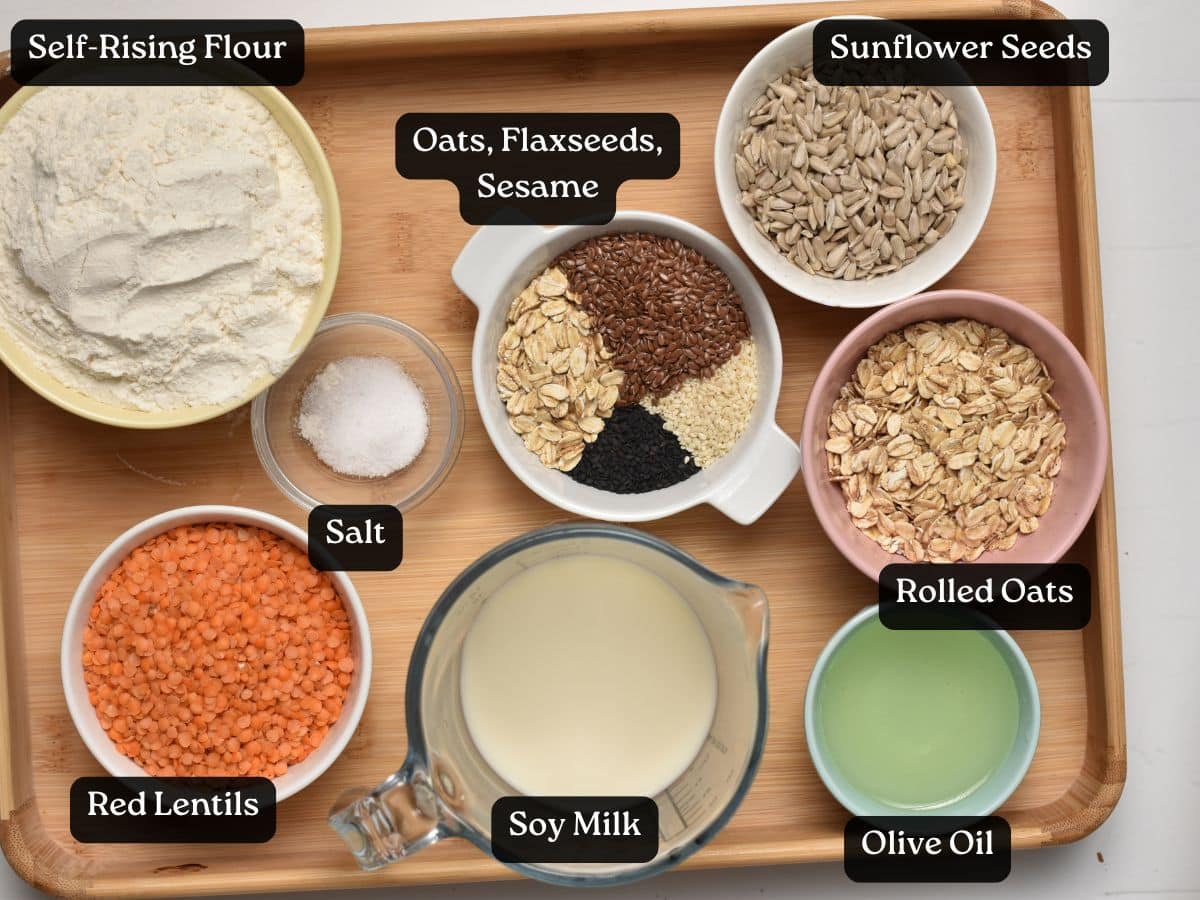
- Red Lentils – These are the star of your protein bread, providing a significant amount of plant-based protein and fiber. They cook down to a mushy consistency, which helps bind the bread. Make sure to use red split lentils, as other varieties like brown or green dried lentils won’t work the same way in this recipe.
- Water – This is used to cook the red lentils, helping them soften and become mushy, which is essential for the bread’s texture.
- Self-Rising Flour – This forms the main structure of your bread and already contains leavening agents for a good rise. If you don’t have it, you can create your own by whisking all-purpose flour with baking powder. For a gluten-free option, use my gluten-free converter, but don’t forget the baking powder.
- Soy Milk – This contributes to the liquid content of the dough, ensuring a moist crumb. While any plant-based milk works, soy milk will give your bread the highest protein content.
- Olive Oil – This adds moisture and a tender texture to the bread. You can also use other light-flavor oils, such as canola oil, if you prefer.
- Old-Fashioned Rolled Oats – These are crucial for the texture and firmness of the bread, also adding protein and fiber. You cannot remove them from the recipe as the bread won’t set properly. Quick oats also work.
- Sunflower Seeds – These provide healthy fats, a pleasant texture, and additional protein and fiber. You can swap them for pumpkin seeds or hemp seeds, especially if you want to boost the protein even further. You can also skip them if you don’t like seeds in your bread.
- Salt – This enhances all the flavors in the bread, balancing the taste.
And for the topping, you can add:
- Flaxseeds – These are used as a topping, adding a subtle nutty flavor, healthy fats, and fiber.
- Sesame Seeds – These provide a distinctive flavor and a pleasant crunch as a topping.
- Sunflower seeds – These add a familiar texture and flavor as a topping.
- Rolled Oats – These provide a rustic appearance and a bit of texture as a topping.
How to Make Protein Bread
This is a really easy recipe to whip up, here’s how.

Soak the lentils in water for 10 minutes.
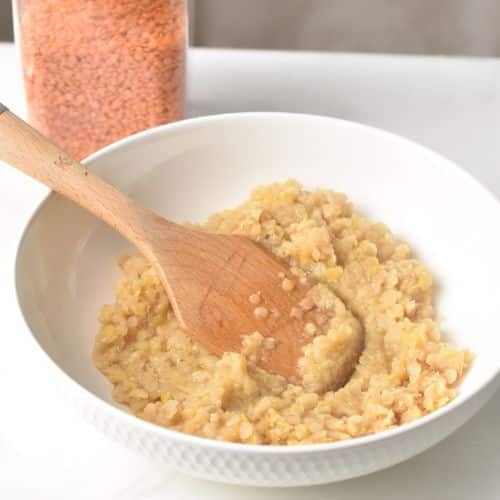
Mash the lentils gently to form a paste.
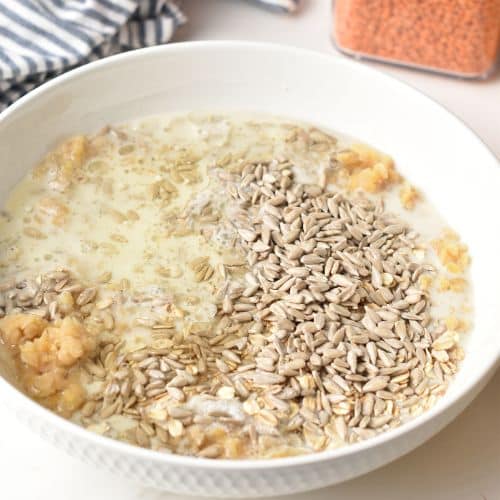
Add the other ingredients and stir to combine into a sticky batter.
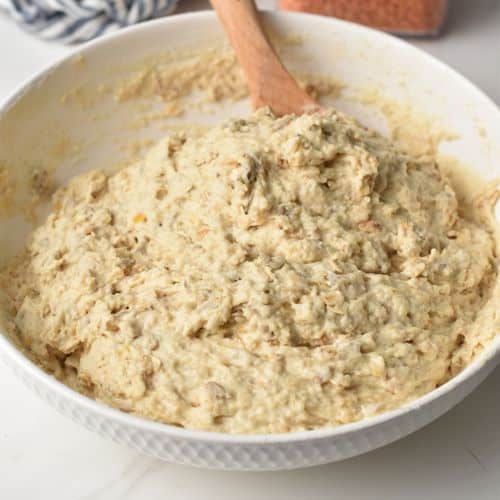
Add the flour and stir to make a dough.
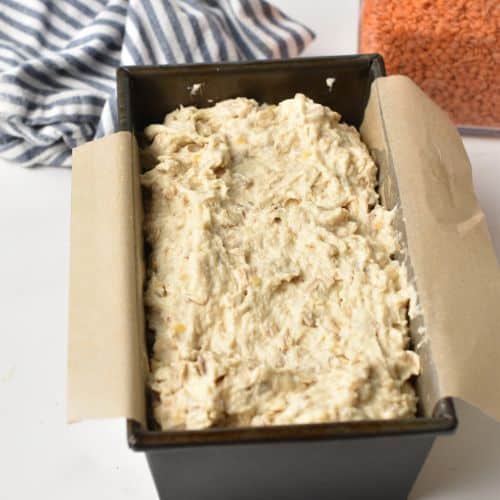
Pour the dough into a loaf pan lined with parchment paper and add the seed toppings.
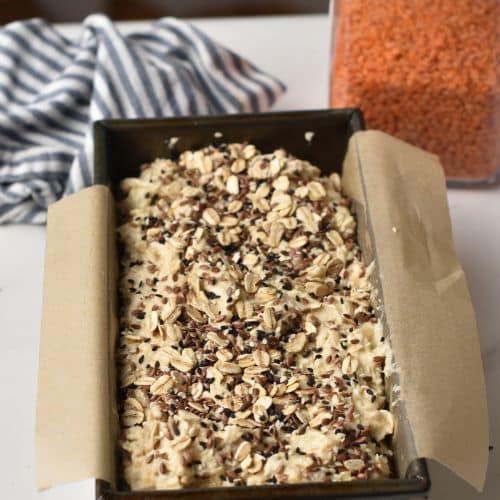
Bake the bread for 30 minutes at 430°F (220°C) and again at 400°F (200°C) for 20 minutes.
Carine’s Baking Tips
Let me share a few more tips for a perfect protein bread.
- Lentil Prep – Soaking the red lentils for at least 10 minutes (or overnight) before cooking helps them soften faster and ensures they become perfectly mushy for your bread batter.
- Cook Lentils Well – Make sure your red lentils are completely soft and mushy after cooking. If there’s any excess water, don’t worry, add it to the mixing bowl with the cooked lentils.
- Mix Batter Thoroughly – Use a rubber spatula to really bring all the ingredients together into a consistent, sticky dough. If it seems too runny, add a little extra self-rising flour, one tablespoon at a time, until it reaches the right consistency.
- Don’t Skip Oats – The oats are essential for the structure and fiber content of this bread. Skipping them will result in a bread that doesn’t firm up correctly.
- Protein Boost – To maximize the protein content per slice, use soy milk for your liquid and consider swapping sunflower seeds for hemp seeds.
- Flour Type Matters – This recipe specifically uses self-rising flour (or a homemade version with all-purpose flour and baking powder). Do not use gluten-free all-purpose flour, as the bread will not turn out correctly.
- Two-Stage Baking – The two-stage baking process (starting at 430°F/220°C then reducing to 400°F/200°C) is important. The initial higher temperature helps the bread rise and set, while the lower temperature ensures it cooks through evenly. The bread must be out of the oven while its temperature decreases.



Thank you for sharing this recipe!
My pleasure!
Thank you I Will try yours recipe today
Let me know how it goes!
Hello, thanks for this recipe I am excited to try it. Will it work the the GF swaps from your other blog about making your recipes GF ?
Yes, it will!
Loved it!
Thank you!
Hello, do you have a photo as to what the bread should look like when sliced?
I made the loaf today, it tastes great but wasn’t sure if it was undercooked as it was quite dense or if it’s correct. it doesn’t taste raw.
Thank you
Luisa
Yes, it’s a dense bread because of the added lentils. Thanks for trying my recipes. I read your next comment and see you find the picture!